


-

José Angel GARCÍA LANDA deposited The Story Behind Any Story: Evolution, Historicity, and Narrative Mapping in the group
 Narrative theory and Narratology on Humanities Commons 4 years, 10 months ago
“The narratives of the world are numberless”; yet, all stories may be seen as chapters of a single story, the story of universal evolution as uncovered by contemporary science, with processes of human emergence and cultural development as a prominent backdrop to the understanding of any narrative process. Evolutionary approaches to literary and…[Read more]
-

Derek Johnston deposited Reading Folk Horror Through Nostalgia in the group
 Film Studies on Humanities Commons 4 years, 10 months ago
This paper considers the use of Boym’s formulations of reflective and restorative nostalgia as a productive lens for viewing the tensions within folk horror texts and their appeals. Considering folk horror texts such as The Wicker Man, Midsommar and The Living and the Dead, the paper will demonstrate that Boym’s two conceptions help to draw out…[Read more]
-

Adelheid Heftberger deposited Archiving For an Unknown Future. The State Film Documentation of the GDR (SFD) in the group
Film Studies on Humanities Commons 4 years, 10 months agoI will mainly focus on a collection of films made between 1972 and 1985 by the Staatliche Filmdokumentation (SFD)—the State Film
Documentation unit—which survived as part of the collection of the Staatliches Filmarchiv der DDR (SFA), the former national film archive
of the GDR. -
José Angel GARCÍA LANDA deposited Con la Historia a cuestas: ‘Lone Star’, de John Sayles in the group
Film Studies on Humanities Commons 4 years, 11 months agoSpanish abstract: ‘Lone Star’ (John Sayles, 1996) es una película sobre la etnicidad y sobre el peso del pasado tratado aquí de manera reflexiva. Es un tema inevitablemente presente en las películas norteamericanas (o en muchas de ellas) pero a menudo sólo como parte del trasfondo, o evitado en el desarrollo de la historia principal. Aquí está…[Read more]
-
José Angel GARCÍA LANDA deposited Infiltrados (The Departed): La paradoja del espía in the group
Film Studies on Humanities Commons 4 years, 11 months agoSpanish abstract: Dos hombres en lados opuestos de la ley están infiltrados —en la Policía y en la mafia— pero hierven la violencia y la sangre derramada cuando la información sale a la luz, y se envía a cada topo a averiguar quién es el enemigo interior. ‘Infiltrados’ es una película de Martin Scorsese que explora la ‘paradoja del espía’, a…[Read more]
-

Sérgio Dias Branco deposited Cinema Transformed in the group
Film Studies on Humanities Commons 4 years, 12 months agoReview of Mike Wayne’s “Marxism Goes to the Movies”.
-
José Angel GARCÍA LANDA deposited Dimensiones del discurso (Tenor, Mode, Domain) in the group
Narrative theory and Narratology on Humanities Commons 4 years, 12 months agoUn esquema utilizado en mis clases de Comentario de Textos Literarios Ingleses para explicar las diversas dimensiones o parámetros de análisis funcional del discurso: la relación entre interlocutores o ‘tenor’, el canal comunicativo, medio o ‘modo’, y la función interactivo-comunicativa o ‘dominio’. ___…[Read more]
-
Todd Comer deposited Pacifism as Ideological Complicity in The Big Lebowski in the group
Film Studies on Humanities Commons 5 years agoAbstract: Insofar as Walter identifies with this myth, his rational imperative is profoundly interrupted. However, this representational interruption also operates on a larger level. Since the film opens and closes with the western actor Sam Elliott (The Stranger) and is shot through with western stylistic motifs, it can be seen as striving toward…[Read more]
-
Malin Lidström Brock deposited Philomena and Ireland’s Mother-and-baby Homes in the group
Film Studies on Humanities Commons 5 years agoThis chapter examines the portrayal of Ireland’s mother-and-baby homes in Stephen Frear’s film Philomena (2013) and the biography on which the film is based, the British journalist Martin Sixsmith’s account of Philomena Lee’s life and search for her son, who was given up to an American couple for adoption under coercive circumstances. Enforced a…[Read more]
-
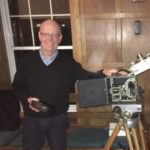
Richard Bossons deposited MAN WITH A MOVIE CAMERA: trainspotting! in the group
Film Studies on Humanities Commons 5 years agoAs with many of the Kinoks’ films trains often appear in Dziga Vertov’s 1929 masterpiece, ‘Man with a Movie Camera’. Used to create dynamism, criss-crossing the screen, often at dramatic angles, and acting as a counterpoint to previous and following scenes. Train sequences also signpost a journey to Odesa by the eponymous cameraman. The paper…[Read more]
-
Richard Bossons deposited MAN WITH A MOVIE CAMERA: the movie cameras in the group
Film Studies on Humanities Commons 5 years agoDziga Vertov’s 1929 masterpiece ‘Man with a Movie Camera’ is a staple of film studies courses and academic papers but there has been no research until now into the important ‘co-stars’ of the film, the movie cameras. This paper discusses in detail the Debrie Parvo and other cameras used by the film’s cinematographer Mikhail Kaufman.
- Load More
Open access, open source, open to all


I am struck by the event of dissolution (in Spencer’s articulation). I wonder how one might think of narrative dissipating into narrativity. Not so much all stories being chapters of a single story as all stories as potential building blocks for other stories. The challenge for me is actually observing a narrative degenerate. The glue is quick…[Read more]
Yes, I agree, François, one story does lead into another one…. And sometimes, what is the central story for us, with its point and everything, becomes just a building block for someone else’s story. Makes me think of what Rochester says in a poem, “Dead, we become the lumber of the world”.
Very tickled to discover that Rochester’s translation of Seneca continues thus:
Dead, we become the lumber of the world,
And to that mass of matter shall be swept
Where things destroy’d with things unborn are kept.
Yes, quite impressive! I also recommend the Johnny Depp film on Rochester, ‘The Libertine’.