About
Tekla Babyak, Disabled Independent Scholar with MS
tbb8@cornell.edu
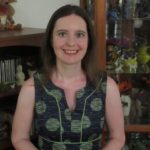
Tekla Babyak received her PhD in Musicology from Cornell University in 2014, supported by a Mellon Fellowship in Humanistic Studies and a Jacob K. Javits Fellowship. Currently based in Davis, CA, she is an independent musicologist and disability activist who has multiple sclerosis (MS). Ableist hiring practices have prevented her from obtaining stable employment. Nevertheless, she publishes her research, presents at conferences, gives invited guest lectures, and serves on committees for the American Musicological Society, the Society for Music Theory, and the Modern Language Association.
Dr. Babyak’s work falls broadly into two categories: disability activism in the academic humanities, and nineteenth-century musical aesthetics. Her
Current Musicology article “
My Intersecting Quests as a Disabled Independent Scholar” (2020) offers strategies to uplift disabled voices in academia. In Nov. 2022, Dr. Babyak gave an interview for Scholastica on “
Steps journals can take to support authors living with disabilities.”
As an interdisciplinary scholar, she works on aesthetics, hermeneutics, and spirituality in nineteenth-century German and French music. Recent publications include “Living Forever on Earth: Philosophies of Temporal Eternity in Beethoven’s Ops. 110 and 132,” (
19th-Century Music, Fall 2023) as well as a chapter, “Rehearing Brahms’s Late Intermezzi: The Eternal Recurrence of Reflection,” in
Rethinking Brahms (eds. Nicole Grimes and Reuben Phillips, OUP, 2022).
Across her wide variety of research fields, Dr. Babyak always brings an activist-oriented perspective to her projects. For the sake of disability pride, she discloses her MS in her contributor bios for publications and conferences. Also, she self-advocates for her access needs in professional spaces, requesting extra compliments and encouragement because of her MS-related anxiety disorder. Her goal is to show that a disabled independent musicologist can make a meaningful contribution to academic scholarship and social justice.
Education
PhD, Musicology, Cornell University, 2014 Publications
“
Living Forever on Earth: Philosophies of Temporal Eternity in Beethoven’s Ops. 110 and 132,”
Nineteenth-Century Music, Fall 2023
“
Rehearing Brahms’s Late Intermezzi: The Eternal Recurrence of Reflection,”
Rethinking Brahms, eds. Nicole Grimes and Reuben Phillips (Oxford and New York: Oxford University Press, 2022), 142-155.
“
My Intersecting Quests as a Disabled Independent Scholar,”
Current Musicology (Fall 2020), 158-162.
“The Rubble of the Other: Beethoven’s
Ruins of Athens.”
Historians Without Borders: New Studies in Multidisciplinary History, eds. Lawrence Abrams and Kaleb Knoblauch (London and New York: Routledge, 2019), 9-23.
“
Dante, Liszt, and the Alienated Agony of Hell,”
Bibliotheca Dantesca, December 2018, Vol. 1, 196-218.
“
Tropes of Transcendence: Representing and Overcoming Time in Nineteenth-Century Music,”
Journal of the Royal Musical Association, Fall 2017, 142:2, 461-470.
Projects
Diatonic church modes and plagal cadences as disability signifiers in 19th-century musical works (Beethoven; Brahms; Fanny Hensel; Felix Mendelssohn) and theory treatises (A.B. Marx)
Intersections between theology, pianism, and temporality in Beethoven, Brahms, Liszt, and Marie Jaëll
Invitational Pedagogy, a project advocating for disabled independent scholars to give guest lectures in university courses
Memberships
American Brahms Society; American Musicological Society; American Society for Eighteenth-Century Studies; Goethe Society of North America; Haydn Society of North America; Modern Language Association; North American Kant Society; Society for Music Theory