


Sara Victoria Torres
,@svtorres18
0
Following
2
Followers
-

Oscar Perea-Rodriguez deposited De la ‘fermosa judía’ a la bella conversa: la erótica de lo prohibido en las literaturas hispánicas del medievo y del temprano renacimiento in the group
 Medieval Studies on Humanities Commons 2 years, 7 months ago
La hipersexualización de personajes femeninos en la literatura de todos los tiempos responde a varios patrones culturales bastante determinados y convenientemente analizados por la teoría literaria, tanto la de rango más generalista (Dworkin 13-47) como la dedicada de forma específica a las literaturas hispánicas (García Velasco 292-307). En el…[Read more]
-
Oscar Perea-Rodriguez deposited De la ‘fermosa judía’ a la bella conversa: la erótica de lo prohibido en las literaturas hispánicas del medievo y del temprano renacimiento in the group
 Late Medieval History on Humanities Commons 2 years, 7 months ago
La hipersexualización de personajes femeninos en la literatura de todos los tiempos responde a varios patrones culturales bastante determinados y convenientemente analizados por la teoría literaria, tanto la de rango más generalista (Dworkin 13-47) como la dedicada de forma específica a las literaturas hispánicas (García Velasco 292-307). En el…[Read more]
-
Oscar Perea-Rodriguez deposited Escitia y Escancia (o Escandia), el fabuloso pasado nórdico del neogoticismo cuatrocentista hispánico in the group
Medieval Studies on Humanities Commons 2 years, 7 months agoEl artículo analiza el neogoticismo y su incidencia en la propaganda ideológica dispersa en la Edad Media hispánica desde los siglos IX al XV. Se estudia su apogeo en las crónicas medievales y su posterior desaparición, así como su recuperación entre los siglos XV y XVI de la mano de obras genealógicas y de cancioneros poéticos. Específi…[Read more]
-
Oscar Perea-Rodriguez deposited Escitia y Escancia (o Escandia), el fabuloso pasado nórdico del neogoticismo cuatrocentista hispánico in the group
Late Medieval History on Humanities Commons 2 years, 7 months agoEl artículo analiza el neogoticismo y su incidencia en la propaganda ideológica dispersa en la Edad Media hispánica desde los siglos IX al XV. Se estudia su apogeo en las crónicas medievales y su posterior desaparición, así como su recuperación entre los siglos XV y XVI de la mano de obras genealógicas y de cancioneros poéticos. Específi…[Read more]
-
Oscar Perea-Rodriguez deposited La controversia judía y judeoconversa en los debates del Cancionero de Baena in the group
Medieval Studies on Humanities Commons 2 years, 7 months agoLos debates literarios son prácticamente consustanciales e intrínsecos a la existencia de la literatura en cualquier lengua y en cualquier cultura, en tanto que «en último término, remiten a condicionamientos pragmáticos humanos» (Chas Aguión 2002 : 59). Por lo que respecta a su inserción en la cultura de la Edad Media hispánica, hay un aspecto i…[Read more]
-
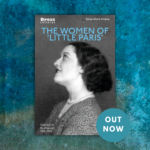
Sonia D. Andras deposited Selling Glamour: Marketing Western Women’s Fashion in Interwar Bucharest in the group
 Gender Studies on Humanities Commons 2 years, 7 months ago
This paper explores the dynamics of women’s fashion marketing in advertisements and promotional materials related to Western ideas, materials or products. It will analyse published promotional visual and written texts in the interwar Bucharest press, with local or national distribution. The aim is to ascertain the degree and nature of Western w…[Read more]
-
Pragya Ranjan deposited Cave of Spleen – a feminist perspective: Status of women in early 18th century England in the group
 Renaissance / Early Modern Studies on Humanities Commons 2 years, 7 months ago
“The Rape of the Lock” by Alexander Pope published in 1712 is a mock-heroic narrative which satirically
glorifies trivial incident of cutting of locks of protagonist Belinda. This poem was written in the
Augustan Era (1660-1784) which is marked by the period of scientific reason and rationality, whose
effect can be seen on the writers of those…[Read more] -
Pragya Ranjan deposited Cave of Spleen – a feminist perspective: Status of women in early 18th century England in the group
Gender Studies on Humanities Commons 2 years, 7 months ago“The Rape of the Lock” by Alexander Pope published in 1712 is a mock-heroic narrative which satirically
glorifies trivial incident of cutting of locks of protagonist Belinda. This poem was written in the
Augustan Era (1660-1784) which is marked by the period of scientific reason and rationality, whose
effect can be seen on the writers of those…[Read more] -
Pragya Ranjan deposited Cave of Spleen – a feminist perspective: Status of women in early 18th century England in the group
 Feminist Humanities on Humanities Commons 2 years, 7 months ago
“The Rape of the Lock” by Alexander Pope published in 1712 is a mock-heroic narrative which satirically
glorifies trivial incident of cutting of locks of protagonist Belinda. This poem was written in the
Augustan Era (1660-1784) which is marked by the period of scientific reason and rationality, whose
effect can be seen on the writers of those…[Read more] -
Liz Sparg deposited Generation to Generation in the group
Gender Studies on Humanities Commons 2 years, 8 months agoThis book brings together thirteen contributors from diverse backgrounds – mean and women born in Cameroon, England, Scotland, South Africa, Zambia. What they all have in common is years of service within their respective communities, working individually and within projects and programmes, with both young people and adults to build social c…[Read more]
-

Monica H. Green deposited Shifting Paradigms in Black Death Chronologies in the group
Medieval Studies on Humanities Commons 2 years, 8 months agoThis blogpost summarizes findings presented at a talk at Erfurt University on 16 May 2023, in the series KFG “Religion and Urbanity: Reciprocal Formation,” Global Exchange: Trade, Knowledge, and Religion. In this blogpost we present our key argument that rigorous correlation between archaeological, genomic, and documentary evidence dem…[Read more]
-

Carol Chiodo deposited The Role of the ESU in Creating a Values-Driven DH Community in the group
Feminist Humanities on Humanities Commons 2 years, 8 months agoIn this essay, we illustrate how the European Summer University in Digital Humanities at the University of Leipzig (hereafter referred to as “ESU”) under the leadership of Prof. Dr. Elisabeth Burr has set forth a set of values that have built and continue to model a collaborative, communal, and compassionate future for higher education. We ide…[Read more]
-
Christopher Griffin deposited Recognition Against Liberation: On the UK’s Unreformed Gender Recognition Act in the group
Gender Studies on Humanities Commons 2 years, 8 months agoIn this short article I argue that the UK government’s decision not to update the Gender Recognition Act 2004 (GRA) is more than a missed opportunity. It weaponises the GRA, now an effective instrument of assimilation and containment. The failure to reform the GRA seems like a maintenance of the status quo, but given that the circumstances have s…[Read more]
-

Christopher Crosbie deposited Oeconomia and the Vegetative Soul: Rethinking Revenge in The Spanish Tragedy in the group
Renaissance / Early Modern Studies on Humanities Commons 2 years, 8 months agoThomas Kyd’s The Spanish Tragedy creates a subtle apologia for the “middling sort” by challenging the socially constructed predicates of aristocratic privilege. A scrivener’s son, Kyd undertsood oeconomia, or household management, as both the means for material advancement among the “middling sort” and a potential threat to aristocratic insular…[Read more]
-
Christopher Crosbie deposited Oeconomia and the Vegetative Soul: Rethinking Revenge in The Spanish Tragedy in the group
 Early Modern Theater on Humanities Commons 2 years, 8 months ago
Thomas Kyd’s The Spanish Tragedy creates a subtle apologia for the “middling sort” by challenging the socially constructed predicates of aristocratic privilege. A scrivener’s son, Kyd undertsood oeconomia, or household management, as both the means for material advancement among the “middling sort” and a potential threat to aristocratic insular…[Read more]
-
Christopher Crosbie deposited “The Comedy of Errors, Haecceity, and the Metaphysics of Individuation” in the group
Renaissance / Early Modern Studies on Humanities Commons 2 years, 9 months agoExamines Shakespeare’s The Comedy of Errors and the epistemological challenges of differentiating twins in light of Aristotle’s Metaphysics, specifically his theories of substance and individuation.
-
Christopher Crosbie deposited “The Comedy of Errors, Haecceity, and the Metaphysics of Individuation” in the group
Early Modern Theater on Humanities Commons 2 years, 9 months agoExamines Shakespeare’s The Comedy of Errors and the epistemological challenges of differentiating twins in light of Aristotle’s Metaphysics, specifically his theories of substance and individuation.
-
Sonia D. Andras deposited Allo, allo, ici le Bucharest du pedigree! The nationalization of women’s fashion in interwar Bucharest (OA) in the group
Gender Studies on Humanities Commons 2 years, 9 months agoThe newly formed Greater Romania engaged in a process of modernization, with Bucharest as its flagship metropolis, striving to be recognized internationally and reach economic stability. Women’s fashion became a marker in substantiating Romania’s self-assertion as a modern state, with great emphasis on creating a viable textile industry. This occ…[Read more]
-
Sonia D. Andras deposited Crafting Illusions: Fashion as a Means of Decoding Social and Cultural History in Interwar Bucharest (OA) in the group
Gender Studies on Humanities Commons 2 years, 9 months agoThis paper examines the influence of urban fashion ideas disseminated worldwide from France and how they impacted the Romanian ideas of style and beauty, as well as the nature of the communication between Paris and the Little Paris. My aim is to decode the interwar Romanian interpretation of the new woman notion and assess what type of role…[Read more]
-
Sonia D. Andras deposited Creating City Chic. The Parisian Influence on Interwar Bucharest Fashion (OA) in the group
Gender Studies on Humanities Commons 2 years, 9 months agoThis paper examines the influence of urban fashion ideas disseminated worldwide from France and how they impacted the Romanian ideas of style and beauty, as well as the nature of the communication between Paris and the so-colled ”Little Paris”. My aim is to decode the interwar Romanian interpretation of the new woman notion and assess what typ…[Read more]
- Load More


