


Shawn Eyer
,@seyer
0
Following
2
Followers
-

Meredith Warren deposited Muted and Hidden Monsters in Revelation 12 in the group
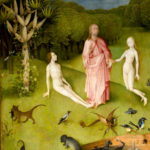 Biblical Studies on Humanities Commons 3 years, 2 months ago
The Woman clothed with the Sun makes a brief appearance in Revelation 12; however, her influence upon the imaginations of artists and interpreters is substantive. She is unnamed and yet multiple identities are ascribed to her including individual women (Eve, Mary), corporate institutions (Israel, the church), and ancient goddesses. In this…[Read more]
-
Meredith Warren deposited Moses Married a Black Woman: Modern American Receptions of the Cushite Wife of Moses in the group
Biblical Studies on Humanities Commons 3 years, 2 months agoAmericans overwhelmingly assume that Moses married a Black woman. Using sources from the nineteenth and twentieth centuries, this article highlights interpretations of Moses’s marriage to the Cushite woman in Numbers 12. Utilising cultural-critical reception history—that biblical interpretation is culturally conditioned—readers in the United State…[Read more]
-
Meredith Warren deposited Forgetting the Forgetter: The Cupbearer in the Joseph Saga (Genesis 40–41) in the group
Biblical Studies on Humanities Commons 3 years, 2 months agoTypically, the cupbearer in Genesis 40–41 is interpreted only as a member of Joseph’s supporting cast. However, closely reading this minor character suggests more options for interpreting both him and other anonymous courtiers found throughout the Hebrew Bible. The cupbearer’s actions (and inactions) raise ethical and psychological questions about…[Read more]
-
Meredith Warren deposited The Social Dynamics Surrounding Yahwistic Women’s Supposed Ritual Deviance in Ezekiel 13:17–23 in the group
Biblical Studies on Humanities Commons 3 years, 2 months agoThis article suggests that in Ezekiel 13:17–23 we have an example of the ritual activities of Yahwistic women being undermined. However, rather than opening the hermeneutical crux of attempting to understand what it is the women are doing or how their ritual activity is functioning, I will focus squarely on the broader social dynamics in the t…[Read more]
-
Meredith Warren deposited “Call Me By Your Name”: Critical Fabulation and the Woman of Judges 19 in the group
Biblical Studies on Humanities Commons 3 years, 2 months agoIs anonymity a form of violence? The woman of Judges 19 endured gang-rape and dismemberment, and neither the Bible nor its ancient exegetes gave her a name. This article surveys the modern writers and scholars who chose new names for her, examining how their choices of names reflected their broader goals for retelling her story. From there, I turn…[Read more]
-
Meredith Warren deposited Editorial, Unnamed and Uncredited: Anonymous Figures in the Biblical World in the group
Biblical Studies on Humanities Commons 3 years, 2 months agoEditorial preface
-

Jason Goroncy deposited Ethnicity, Social Identity, and the Transposable Body of Christ in the group
Biblical Studies on Humanities Commons 3 years, 2 months agoThis essay attends to the relationship between our ethnic, social, and cultural identities, and the creation of the new communal identity embodied in the Christian community. Drawing upon six New Testament texts – Ephesians 2:11–22; Galatians 3:27–28; 1 Corinthians 7:17–24 and 10:17; 1 Peter 2:9–11; and Revelation 21:24–26 – it is argued that t…[Read more]
-

Julia Rhyder deposited “Festivals and Violence in 1 and 2 Maccabees: Hanukkah and Nicanor’s Day,” Hebrew Bible and Ancient Israel, 10, no. 1 (2021): 63–76. in the group
Biblical Studies on Humanities Commons 3 years, 3 months agoThis article analyzes the nexus between collective violence, temple violation, and military glory in 1 and 2 Maccabees by comparing two festivals established in the context of revolt and guerilla warfare; namely, Hanukkah and Nicanor’s Day. It argues that the accounts of the origins of these two festivals in 1 and 2 Maccabees reinforce the close c…[Read more]
-

Joachim Berger deposited »une institution cosmopolite«? Rituelle Grenzziehungen im freimaurerischen Internationalismus um 1900 in the group
 Freemasonry and Masonic Studies on Humanities Commons 3 years, 3 months ago
The period of masonic internationalism in the last third of the 19th and first third of the 20th centuries saw the most visible – and controversial – attempts to organisationally model the “cosmopolitan imperative” of freemasonry. The various freemasonries in Europe saw themselves as links in a world-spanning “chain of brothers” forged by the…[Read more]
-
Joachim Berger deposited Godsdienstvrijheid of gewetensvrijheid. De vrijmetselarij als internationale proeftuin voor fundamentele maatschappelijke vraagstukken (ca. 1850–1930) in the group
Freemasonry and Masonic Studies on Humanities Commons 3 years, 3 months agoFreedom of or from religion. Freemasonry as an international testing ground for fundamental societal issues (c. 1850–1930)
In masonic internationalism, key framework parameters of masonic activity were negotiated. They concerned the fundamental societal issue of how religious freedom (freedom to practise religion) and liberty of conscience (…[Read more] -
Joachim Berger deposited “Une œuvre internationale d’un caractère humanitaire”: The Appeal to Humanity in International Masonic Relations in the group
Freemasonry and Masonic Studies on Humanities Commons 3 years, 5 months agoFreemasons often referred to an ideal of “humanité” (Humanität, umanità, humanity) in order to bridge all differences separating mankind. In doing so, they rendered these differences all the more visible, especially in the international arenas. This was definitely the case when freemasons tried to deduce from this ideal “universal” standards…[Read more]
-

Collin Cornell deposited The Value of Egyptian Aramaic for Biblical Studies in the group
Biblical Studies on Humanities Commons 3 years, 5 months agoBiblical Aramaic accounts for a small fraction within the two-testament Christian Bible. Studying it would seem therefore to present a modest value for biblical studies, and Egyptian Aramaic, a nonbiblical counterpart from the same historical era, even more so. The present article argues, however, that comparing Egyptian Aramaic with biblical…[Read more]
-

Matthew Suriano deposited The Privilege of the Living in Caring for the Dead: A Problem of Reciprocity in the group
Biblical Studies on Humanities Commons 3 years, 5 months agoWhat was the significance of ancestors in the Hebrew Bible? The question is spurred by Kerry Sonia’s Caring for the Dead, which argues that the cult of dead kin was an accepted practice in the culture of the biblical writers. In building this thesis, Sonia resists an idea popular in scholarship that the Hebrew Bible promotes a negative view of r…[Read more]
-
Matthew Suriano deposited What Did Feeding the Dead Mean? Two Case Studies from Iron Age Tombs at Beth-Shemesh in the group
Biblical Studies on Humanities Commons 3 years, 5 months agoFeeding the dead was an accepted cultural practice in the world of biblical writers. It is circumscribed by cultic considerations in passages such as Deut 26:14, but there are no texts that prohibit the placing of food inside tombs. Thus, the biblical writers tacitly acknowledged the practice, though feeding the dead is never explicitly prescribed…[Read more]
-
Meredith Warren deposited Sensing the Unknowable: Sensing Revelation, Relationship, and Response in Psalm 139 in the group
Biblical Studies on Humanities Commons 3 years, 6 months agoPsalms write and express revelation, relationship, and response on and through the body; corporeal vocabulary, awareness of embodiment and somatic metaphors abound. This rhetoric draws people in through reference to common experience and uses somatic language to express thoughts and emotions which often escape conceptualisation, such as confusion,…[Read more]
-
Meredith Warren deposited Making Meaning of Touch: Revelation and Sensorial Participation in Daniel 8–10 in the group
Biblical Studies on Humanities Commons 3 years, 6 months agoThroughout Daniel 8–10, Daniel is touched five times by human-like figures. By these touch interventions, he receives both physical and emotional strength which allow him to continue participating in the revelatory experience. This essay argues that embodied participation marked by the sense of touch not only legitimates an authentic revelation b…[Read more]
-
Meredith Warren deposited Alien and Degenerate Milk: Embodiment, Mapping, and Social Identity in Four Nursing Metaphors in the group
Biblical Studies on Humanities Commons 3 years, 6 months agoUsing cognitive metaphor theory to examine the four NT nursing metaphors (1 Thess 2:5–9; 1 Cor 3:1–3; Heb 5:11–14; 1 Pet 2:1–3), this article demonstrates that the same nursing frame can be used quite differently. The work of separating the contributions of each input space and then running the blend demonstrates how each metaphor functio…[Read more]
-
Meredith Warren deposited By Making Me Stink to the Inhabitants of the Land: Intrusive Smells as a Metaphor for Unwanted Migrants in the group
Biblical Studies on Humanities Commons 3 years, 6 months agoThe verb ba’ash (lit. “to stink”) is used repeatedly in the Hebrew Bible to describe unwanted groups or individuals (Gen 34:30; Exod 5:21; 1 Sam 13:4; 1 Sam 27:12; 2 Sam 10:6; 1 Chr 19:6). However, there is an overwhelming tendency in English translations and commentaries to translate bet-aleph-shin in a figurative sense as “obnoxious” (NIV, NKJ…[Read more]
-
Meredith Warren deposited To Work or Not to Work: The Hand and Embodied Wisdom of the Valiant Woman in Proverbs 31:10–31 in the group
Biblical Studies on Humanities Commons 3 years, 6 months agoThe discipline of embodied cognitive science and associated concept of intercorporeality provide the theoretical framework of our analysis of Proverbs 31:10–31. This essay fleshes out the underlying cognitive and meaning-making processes and entailments inherent in the valiant woman’s use of her hands and body as depicted in the poem. The val…[Read more]
-
Meredith Warren deposited The Role of Touch in Comprehending Love: Jesus’s Foot Washing in John 13 in the group
Biblical Studies on Humanities Commons 3 years, 6 months agoWhen Jesus humbly washes his disciples’ feet (John 13), he engages his friends up close using the sense of touch. This article explores how his touch conveys a quality of love that no other physical sense can capture. Sensory Anthropology reveals how touch is often overlooked and undervalued but is quite potent. We confronted these dynamics most r…[Read more]
- Load More