


Ryan J. Lynch
,@ryanjosephlynch
14
Following
7
Followers
-

Nicholas S.M. Matheou deposited Methodological Imperialism in the group
 Medieval Studies on Humanities Commons 2 years, 7 months ago
Byzantinists have a tendency, implicitly or explicitly, to adopt the analytical perspective of the central state and its imperial class. We ask what helped the empire survive and/or expand, and we judge the success of a given ruler, official, or policy according to this criterion. I term this tendency methodological imperialism.
-
Nicholas S.M. Matheou deposited Methodological Imperialism in the group
 Byzantine Studies on Humanities Commons 2 years, 7 months ago
Byzantinists have a tendency, implicitly or explicitly, to adopt the analytical perspective of the central state and its imperial class. We ask what helped the empire survive and/or expand, and we judge the success of a given ruler, official, or policy according to this criterion. I term this tendency methodological imperialism.
-
Nicholas S.M. Matheou deposited Methodological Imperialism on Humanities Commons 2 years, 7 months ago
Byzantinists have a tendency, implicitly or explicitly, to adopt the analytical perspective of the central state and its imperial class. We ask what helped the empire survive and/or expand, and we judge the success of a given ruler, official, or policy according to this criterion. I term this tendency methodological imperialism.
-

Charles Tieszen's profile was updated on Humanities Commons 2 years, 8 months ago
-
Charles Tieszen changed their profile picture on Humanities Commons 2 years, 8 months ago
-
Christopher S. Rose deposited Trial by Virus: Colonial Medicine and the 1883 Cholera in Egypt in the group
 History of Medicine in the Middle East/North Africa on Humanities Commons 2 years, 9 months ago
This article explores how public health was transformed in Egypt soon after its occupation by Great Britain in 1882. Over the course of the nineteenth century, the Egyptian state had invested substantially in health to boost the nation’s economic and military strength, and, especially after the opening of the Suez Canal in 1869, to address E…[Read more]
-
Christopher S. Rose deposited Trial by Virus: Colonial Medicine and the 1883 Cholera in Egypt in the group
 History on Humanities Commons 2 years, 9 months ago
This article explores how public health was transformed in Egypt soon after its occupation by Great Britain in 1882. Over the course of the nineteenth century, the Egyptian state had invested substantially in health to boost the nation’s economic and military strength, and, especially after the opening of the Suez Canal in 1869, to address E…[Read more]
-
Christopher S. Rose deposited Trial by Virus: Colonial Medicine and the 1883 Cholera in Egypt in the group
 Global & Transnational Studies on Humanities Commons 2 years, 9 months ago
This article explores how public health was transformed in Egypt soon after its occupation by Great Britain in 1882. Over the course of the nineteenth century, the Egyptian state had invested substantially in health to boost the nation’s economic and military strength, and, especially after the opening of the Suez Canal in 1869, to address E…[Read more]
-
Christopher S. Rose deposited Trial by Virus: Colonial Medicine and the 1883 Cholera in Egypt in the group
 Digital Middle East & Islamic Studies on Humanities Commons 2 years, 9 months ago
This article explores how public health was transformed in Egypt soon after its occupation by Great Britain in 1882. Over the course of the nineteenth century, the Egyptian state had invested substantially in health to boost the nation’s economic and military strength, and, especially after the opening of the Suez Canal in 1869, to address E…[Read more]
-
Christopher S. Rose deposited Trial by Virus: Colonial Medicine and the 1883 Cholera in Egypt on Humanities Commons 2 years, 9 months ago
This article explores how public health was transformed in Egypt soon after its occupation by Great Britain in 1882. Over the course of the nineteenth century, the Egyptian state had invested substantially in health to boost the nation’s economic and military strength, and, especially after the opening of the Suez Canal in 1869, to address E…[Read more]
-
Salam Rassi deposited Scribal and Commentary Traditions at the Dawn of Print: The Manuscripts of the Near Eastern School of Theology as an Archive of the Early Nahḍa in the group
Islamicate Studies on Humanities Commons 3 years agoThis article focuses on the Arabic manuscript collection of the Near Eastern School of Theology (NEST). The NEST library contains several manuscripts that were donated, copied, or read by important Christian-born intellectuals of the nahḍa. Given these men’s role in the emergence of modern publishing in the Middle East, I examine the int…[Read more]
-
Salam Rassi's profile was updated on Humanities Commons 3 years ago
-
Salam Rassi deposited Scribal and Commentary Traditions at the Dawn of Print: The Manuscripts of the Near Eastern School of Theology as an Archive of the Early Nahḍa on Humanities Commons 3 years ago
This article focuses on the Arabic manuscript collection of the Near Eastern School of Theology (NEST). The NEST library contains several manuscripts that were donated, copied, or read by important Christian-born intellectuals of the nahḍa. Given these men’s role in the emergence of modern publishing in the Middle East, I examine the int…[Read more]
-
Salam Rassi deposited Alchemy in an Age of Disclosure: The Case of an Arabic Pseudo-Aristotelian Treatise and its Syriac Christian “Translator” in the group
Alchemy on Humanities Commons 3 years agoThis article examines a little-known and unstudied alchemical treatise, The Epistle on Alchemy (al-Risāla fī l-ṣināʿa) attributed to Aristotle, purportedly translated from Syriac into Arabic by the Nestorian bishop ʿAbdīshōʿ bar Brīkhā (d. 1318). In particular, I investigate the Epistle’s discourse on the concealment and revelation of alchemical…[Read more]
-
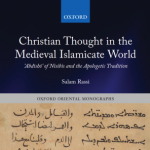
Salam Rassi deposited Christian Thought in the Medieval Islamicate World: ʿAbdīshōʿ of Nisibis and the Apologetic Tradition in the group
 Syriac Studies on Humanities Commons 3 years ago
This book is the first monograph-length study and intellectual biography of ʿAbdīshōʿ of Nisibis (d. 1318), bishop and polymath of the Church of the East. Focusing on his works of apologetic theology, this study examines the intellectual strategies he employs to justify Christianity against Muslim (and to a lesser extent Jewish) criticisms. Bet…[Read more]
-
Salam Rassi deposited Christian Thought in the Medieval Islamicate World: ʿAbdīshōʿ of Nisibis and the Apologetic Tradition in the group
Islamicate Studies on Humanities Commons 3 years agoThis book is the first monograph-length study and intellectual biography of ʿAbdīshōʿ of Nisibis (d. 1318), bishop and polymath of the Church of the East. Focusing on his works of apologetic theology, this study examines the intellectual strategies he employs to justify Christianity against Muslim (and to a lesser extent Jewish) criticisms. Bet…[Read more]
-
Salam Rassi deposited Alchemy in an Age of Disclosure: The Case of an Arabic Pseudo-Aristotelian Treatise and its Syriac Christian “Translator” on Humanities Commons 3 years ago
This article examines a little-known and unstudied alchemical treatise, The Epistle on Alchemy (al-Risāla fī l-ṣināʿa) attributed to Aristotle, purportedly translated from Syriac into Arabic by the Nestorian bishop ʿAbdīshōʿ bar Brīkhā (d. 1318). In particular, I investigate the Epistle’s discourse on the concealment and revelation of alchemical…[Read more]
-
Salam Rassi deposited Christian Thought in the Medieval Islamicate World: ʿAbdīshōʿ of Nisibis and the Apologetic Tradition on Humanities Commons 3 years ago
This book is the first monograph-length study and intellectual biography of ʿAbdīshōʿ of Nisibis (d. 1318), bishop and polymath of the Church of the East. Focusing on his works of apologetic theology, this study examines the intellectual strategies he employs to justify Christianity against Muslim (and to a lesser extent Jewish) criticisms. Bet…[Read more]
-
Salam Rassi's profile was updated on Humanities Commons 3 years ago
- Load More
