

Robyn Le Blanc
,@rleblanc
6
Following
6
Followers
-
Gregor M. Schwarb deposited Patrologia Graeca – Versiones Arabicae in the group
 Late Antiquity on Humanities Commons 6 years ago
This is an enhanced compilation of relevant entries from Clavis Patrum Graecorum which was compiled by me (GS) for the “Patristic Literature in Arabic Translations” volume up to Nov. 2015. It is an embryonic version of what was later substantially enlarged and published as “A Bibliographical Guide to Arabic Patristic Translations and Related T…[Read more]
-

Franki Webb deposited Exploring contemporary archaeology with The Last of Us in the group
 Archaeology on Humanities Commons 6 years ago
The Last of Us shows human society severely decimated by the Cordyceps infection, a fungal pathogen that attacks insects but manages to jump onto human hosts. Metaphorical in nature the infected represent “the dying remnants of a past society,” (Farca and Ladeveze 2016, p.8)
-
Justin Walsh deposited Contextualizing Greek Pottery at Hallstatt Sites in the group
 Classical archaeology on Humanities Commons 6 years ago
Seventeen years ago, Brian Shefton wrote, “the distribution pattern of the Greek imports for the Hallstatt period has crystallized a number of years ago and is unlikely to be greatly modified in the future except on point of detail” (Böhr and Shefton 2000, 28). Indeed, publications describing Greek pottery have reached similar conclusions: Gree…[Read more]
-
Justin Walsh deposited Contextualizing Greek Pottery at Hallstatt Sites in the group
Ancient Greece & Rome on Humanities Commons 6 years agoSeventeen years ago, Brian Shefton wrote, “the distribution pattern of the Greek imports for the Hallstatt period has crystallized a number of years ago and is unlikely to be greatly modified in the future except on point of detail” (Böhr and Shefton 2000, 28). Indeed, publications describing Greek pottery have reached similar conclusions: Gree…[Read more]
-
Henry Colburn deposited Gemelli Careri’s Description of Persepolis in the group
Classical archaeology on Humanities Commons 6 years agoThis article examines the description of Persepolis, one of the capital cities of the Achaemenid Persian Empire (ca. 550–330 BCE), by Giovanni Francesco Gemelli Careri (1651–1725) in his illustrated travelogue Giro del mondo (1699–1700). Gemelli Careri’s extensive description of the site—some twenty pages of text accompanied by two plates en…[Read more]
-
Henry Colburn deposited Gemelli Careri’s Description of Persepolis in the group
Archaeology on Humanities Commons 6 years agoThis article examines the description of Persepolis, one of the capital cities of the Achaemenid Persian Empire (ca. 550–330 BCE), by Giovanni Francesco Gemelli Careri (1651–1725) in his illustrated travelogue Giro del mondo (1699–1700). Gemelli Careri’s extensive description of the site—some twenty pages of text accompanied by two plates en…[Read more]
-

Thomas J. Nelson deposited ‘Most Musicall, Most Melancholy’: Avian Aesthetics of Lament in Greek and Roman Elegy in the group
Ancient Greece & Rome on Humanities Commons 6 years agoIn this paper, I explore how Greek and Roman poets alluded to the lamentatory background of elegy through the figures of the swan and the nightingale. After surveying the ancient association of elegy and lament (Section I) and the common metapoetic function of birds from Homer onwards (Section II), I analyse Hellenistic and Roman examples where…[Read more]
-

Tatjana P. Beuthe deposited Trends in the Location and Contents of Bronze-Containing Bronze Age Burials in Scotland in the group
Archaeology on Humanities Commons 6 years agoIdentifying trends is an important element of archaeology, but there is often a lack of regional and inter-regional analyses with regard to the available evidence. This paper attempts to shed light on one aspect of burial practice in Scotland by investigating geographical trends in Bronze Age burials that contain bronze artifacts.
-
Tatjana P. Beuthe deposited The Two Brothers: A Re-evaluation of Their Kinship in the group
Archaeology on Humanities Commons 6 years agoThe relationship between the ‘Two Brothers’ Nakhtankh and Khnumnakht has been heavily debated since the discovery of their mummies in 1907. Re-examining the coffin inscriptions of these two individuals reveals that Nakhtankh and Khnumnakht were likely uncle and nephew.
-
Tatjana P. Beuthe deposited On the validity of sexing data from early excavations: examples from Qau in the group
Archaeology on Humanities Commons 6 years agoA brief technical re-examination of a paper by George Mann on the Qau skeletons in the Duckworth collection is undertaken. Taking into account the original data and technical aspects of skeletal sexing, it is shown that old data on skeletal sexing may not always be as unreliable as previously thought. Factors that may introduce errors into this…[Read more]
-
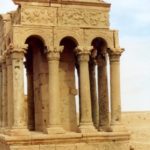
William Caraher deposited The Ambivalent Landscape of Christian Corinth: The Archaeology of Place, Theology, and Politics in a Late Antique City in the group
 Roman Provincial Archaeology on Humanities Commons 6 years, 1 month ago
This chapter argues that the textual and archaeological evidence for imperial involvement in the Corinthia provides faint traces of what Jas Elsner has called “internal friction” in the manifestation of imperial and Corinthian authority in the region.
-
William Caraher deposited The Ambivalent Landscape of Christian Corinth: The Archaeology of Place, Theology, and Politics in a Late Antique City in the group
 Roman archaeology on Humanities Commons 6 years, 1 month ago
This chapter argues that the textual and archaeological evidence for imperial involvement in the Corinthia provides faint traces of what Jas Elsner has called “internal friction” in the manifestation of imperial and Corinthian authority in the region.
-
William Caraher deposited The Ambivalent Landscape of Christian Corinth: The Archaeology of Place, Theology, and Politics in a Late Antique City in the group
Archaeology on Humanities Commons 6 years, 1 month agoThis chapter argues that the textual and archaeological evidence for imperial involvement in the Corinthia provides faint traces of what Jas Elsner has called “internal friction” in the manifestation of imperial and Corinthian authority in the region.
-
William Caraher deposited Reflowing Legacy Data from Polis Chyrsochous on Cyprus in the group
Roman archaeology on Humanities Commons 6 years, 1 month agoA short paper on legacy data, flow, and time in archaeology based on my experiences at Polis on Cyprus.
-
William Caraher deposited Reflowing Legacy Data from Polis Chyrsochous on Cyprus in the group
Archaeology on Humanities Commons 6 years, 1 month agoA short paper on legacy data, flow, and time in archaeology based on my experiences at Polis on Cyprus.
-

Carol Atack deposited Models of Inclusion and Exclusion in Democracy Ancient and Modern: A Response to Paul Cartledge’s Democracy: A Life in the group
Ancient Greece & Rome on Humanities Commons 6 years, 1 month agoThis article forms part of a symposium on Paul Cartledge’s ‘Democracy: a life’ (2016). It argues in support of new approaches to Athenian democracy focused on the experience of those who were not active participants in the political institutions of the democracy but excluded because of their status (women, metics, slaves). It further argues that…[Read more]
-
Carol Atack deposited Precarity and Protest: The politics of Aristophanes’ Lysistrata in the group
 Women in Antiquity on Humanities Commons 6 years, 1 month ago
Reading and performing Aristophanes’ Lysistrata through the work of Judith Butler on performativity and precarity. This paper explores both Aristophanes’ play and the experience of performing and studying it.
-
Carol Atack deposited Precarity and Protest: The politics of Aristophanes’ Lysistrata in the group
Ancient Greece & Rome on Humanities Commons 6 years, 1 month agoReading and performing Aristophanes’ Lysistrata through the work of Judith Butler on performativity and precarity. This paper explores both Aristophanes’ play and the experience of performing and studying it.
-
Glen M Golub deposited Neanderthal for Sapiens in the group
Archaeology on Humanities Commons 6 years, 1 month agoThis commentary takes advantage of the provenance established by Hoffman, et al.2018 to explore exclusionary symbol sets in Art, Astrology, and Myth within La Pasiega Gallery C in Spain. Using the One Godz paradigm plus the added parameter of U-TH dating this commentary ascribes meaning to two proximate rock art panels, one homo sapien and the…[Read more]
-

Dimitri Nakassis deposited Vorsprung durch Technik: Imaging the Linear B Tablets from Pylos in the group
Archaeology on Humanities Commons 6 years, 2 months agoIn this paper we offer an update on the study and imaging of the administrative documents from Pylos in the National Archaeological Museum in Athens from 2013 to 2015, directed by Dimitri Nakassis and Kevin Pluta as part of the full publication of the Pylos tablets in the Palace of Nestor series.
- Load More

