


-
Lisa Zunshine deposited How Memories Become Literature in the group
 TM Literary and Cultural Theory on MLA Commons 2 years, 4 months ago
Cognitive science can help literary scholars formulate specific questions to be answered by archival research. This essay takes as its starting point embedded mental states (that is, mental states about mental states) and their role in generating literary subjectivity. It then follows the transformation of embedded mental states throughout several…[Read more]
-
Lisa Zunshine deposited How Memories Become Literature in the group
 TC Cognitive and Affect Studies on MLA Commons 2 years, 4 months ago
Cognitive science can help literary scholars formulate specific questions to be answered by archival research. This essay takes as its starting point embedded mental states (that is, mental states about mental states) and their role in generating literary subjectivity. It then follows the transformation of embedded mental states throughout several…[Read more]
-
Lisa Zunshine deposited How Memories Become Literature in the group
 Interdisciplinary Approaches to Culture and Society on MLA Commons 2 years, 4 months ago
Cognitive science can help literary scholars formulate specific questions to be answered by archival research. This essay takes as its starting point embedded mental states (that is, mental states about mental states) and their role in generating literary subjectivity. It then follows the transformation of embedded mental states throughout several…[Read more]
-
Lisa Zunshine deposited How Memories Become Literature in the group
 GS Prose Fiction on MLA Commons 2 years, 4 months ago
Cognitive science can help literary scholars formulate specific questions to be answered by archival research. This essay takes as its starting point embedded mental states (that is, mental states about mental states) and their role in generating literary subjectivity. It then follows the transformation of embedded mental states throughout several…[Read more]
-
Cognitive science can help literary scholars formulate specific questions to be answered by archival research. This essay takes as its starting point embedded mental states (that is, mental states about mental states) and their role in generating literary subjectivity. It then follows the transformation of embedded mental states throughout several…[Read more]
-
Lisa Zunshine deposited Manipulating Metacognition in Witness for the Prosecution in the group
 TM Literary Criticism on MLA Commons 2 years, 4 months ago
This essay exemplifies a cognitive approach to literary and film studies, with particular emphasis on fictional reimagining of legal institutions. It draws on research of cognitive scientists who study metacognition—specifically, the difference between reflective and intuitive beliefs—to suggest that courtroom dramas, such as Billy Wilder’s Witne…[Read more]
-
Lisa Zunshine deposited Manipulating Metacognition in Witness for the Prosecution in the group
 TC Popular Culture on MLA Commons 2 years, 4 months ago
This essay exemplifies a cognitive approach to literary and film studies, with particular emphasis on fictional reimagining of legal institutions. It draws on research of cognitive scientists who study metacognition—specifically, the difference between reflective and intuitive beliefs—to suggest that courtroom dramas, such as Billy Wilder’s Witne…[Read more]
-
Lisa Zunshine deposited Manipulating Metacognition in Witness for the Prosecution in the group
TC Cognitive and Affect Studies on MLA Commons 2 years, 4 months agoThis essay exemplifies a cognitive approach to literary and film studies, with particular emphasis on fictional reimagining of legal institutions. It draws on research of cognitive scientists who study metacognition—specifically, the difference between reflective and intuitive beliefs—to suggest that courtroom dramas, such as Billy Wilder’s Witne…[Read more]
-
Lisa Zunshine deposited Manipulating Metacognition in Witness for the Prosecution in the group
 MS Screen Arts and Culture on MLA Commons 2 years, 4 months ago
This essay exemplifies a cognitive approach to literary and film studies, with particular emphasis on fictional reimagining of legal institutions. It draws on research of cognitive scientists who study metacognition—specifically, the difference between reflective and intuitive beliefs—to suggest that courtroom dramas, such as Billy Wilder’s Witne…[Read more]
-
Lisa Zunshine deposited Manipulating Metacognition in Witness for the Prosecution in the group
Interdisciplinary Approaches to Culture and Society on MLA Commons 2 years, 4 months agoThis essay exemplifies a cognitive approach to literary and film studies, with particular emphasis on fictional reimagining of legal institutions. It draws on research of cognitive scientists who study metacognition—specifically, the difference between reflective and intuitive beliefs—to suggest that courtroom dramas, such as Billy Wilder’s Witne…[Read more]
-

Shaden M. Tageldin's profile was updated on MLA Commons 2 years, 4 months ago
-
Lisa Zunshine deposited Manipulating Metacognition in Witness for the Prosecution on MLA Commons 2 years, 5 months ago
This essay exemplifies a cognitive approach to literary and film studies, with particular emphasis on fictional reimagining of legal institutions. It draws on research of cognitive scientists who study metacognition—specifically, the difference between reflective and intuitive beliefs—to suggest that courtroom dramas, such as Billy Wilder’s Witne…[Read more]
-

Rocío Quispe-Agnoli's profile was updated on MSU Commons 2 years, 5 months ago
-
Rocío Quispe-Agnoli replied to the topic Welcome and Introductions: CLICK AND INTRODUCE YOURSELF HERE in the discussion
 MSU Art-Science-Culture Collaboration on MSU Commons 2 years, 5 months ago
¡Hola a todo/as! I am Rocío Quispe-Agnoli, a Professor of Latin American literatures and cultures in the Romance and Classical Studies Department. My main area of specialization is Indigenous studies of Latin America, with special attention to race, ethnicity, gender, and sexualities in the 16th-19th centuries. I also work on the intertextuality b…[Read more]
-
Rocío Quispe-Agnoli changed their profile picture on MSU Commons 2 years, 5 months ago
-
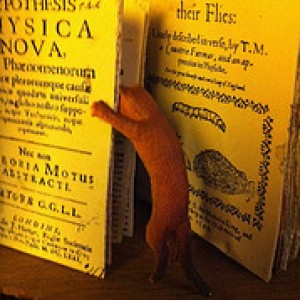
Vimala C. Pasupathi deposited “TEACHING WITH COMMONPLACE BOOKS IN THE AGE OF #RELATABLECONTENT” in the group
 LLC Shakespeare on MLA Commons 2 years, 5 months ago
An Essay about a Commonplace book assignment I wrote and tested in 2012 (published in Journal of Interactive Technology & Pedagogy in 2014) and have since revisited and reflected upon. The essay goes into more detail about aspects of my assignment that I had not discussed in my earlier, and more practical, publication for JITP––more spe…[Read more]
-
Vimala C. Pasupathi deposited “TEACHING WITH COMMONPLACE BOOKS IN THE AGE OF #RELATABLECONTENT” in the group
 LLC 17th-Century English on MLA Commons 2 years, 5 months ago
An Essay about a Commonplace book assignment I wrote and tested in 2012 (published in Journal of Interactive Technology & Pedagogy in 2014) and have since revisited and reflected upon. The essay goes into more detail about aspects of my assignment that I had not discussed in my earlier, and more practical, publication for JITP––more spe…[Read more]
-
Vimala C. Pasupathi deposited “TEACHING WITH COMMONPLACE BOOKS IN THE AGE OF #RELATABLECONTENT” in the group
 LLC 16th-Century English on MLA Commons 2 years, 5 months ago
An Essay about a Commonplace book assignment I wrote and tested in 2012 (published in Journal of Interactive Technology & Pedagogy in 2014) and have since revisited and reflected upon. The essay goes into more detail about aspects of my assignment that I had not discussed in my earlier, and more practical, publication for JITP––more spe…[Read more]
-
Vimala C. Pasupathi deposited “TEACHING WITH COMMONPLACE BOOKS IN THE AGE OF #RELATABLECONTENT” on Humanities Commons 2 years, 5 months ago
An Essay about a Commonplace book assignment I wrote and tested in 2012 (published in Journal of Interactive Technology & Pedagogy in 2014) and have since revisited and reflected upon. The essay goes into more detail about aspects of my assignment that I had not discussed in my earlier, and more practical, publication for JITP––more spe…[Read more]
-
Lisa Zunshine deposited “Why Reasonable Children Don’t Think that Nutcracker is Alive or that the Mouse King is Real” in the group
TM Literary and Cultural Theory on MLA Commons 2 years, 5 months agoZunshine’s essay draws on recent research in developmental psychology and cognitive evolutionary anthropology to examine emotional responses to supernatural events by the child and adult characters of E. T. A. Hoffmann’s The Nutcracker and the Mouse King (1816), as well as to revisit the traditional literary critical view of those responses, acc…[Read more]
- Load More
Open access, open source, open to all
