


-

Ann E Mullaney deposited Macaronic Publishing 1521: Five Letters by Teofilo Folengo, Alessandro Paganin and Federcio Gonzaga in the group
 Renaissance / Early Modern Studies on Humanities Commons 4 years, 7 months ago
A letter from Folengo’s pseudonym-personality, Merlin, to the printer Paganini, claiming that he does not want to relinquish his own copy for publication; a response from Paganini telling him that he got a copy of the text from Federico Gonzaga (accompanied by the letter Gonzaga sent to Paganini, 1520); a letter to the reader from Paganini, and a…[Read more]
-
Jyotirmaya Patnaik deposited Social Media and Slacktivism in Young People’s Life in the group
 Medical Humanities on Humanities Commons 4 years, 7 months ago
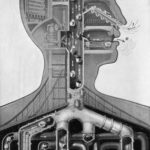
This study examined such issues as social media in personality development
and their influence on the development of public activism among young people.
We also estimate the efficiency that various forms of information exchange
have (shared or anonymous). The empirical base of the research includes
sociological surveys held in Kazakhstan. We…[Read more] -
Ann E Mullaney deposited Teofilo Folengo Baldus Glosses Compared 1517 and 1520 in the group
Renaissance / Early Modern Studies on Humanities Commons 4 years, 7 months agoA comparison of all the marginal glosses from the epic poemn Baldus by Teofilo Folengo in the 1517 Paganini edition and in the 1520 reprint by Cesare Arrivabene: side by side comparison and translation into English
-
Ann E Mullaney deposited MERLINI COCAI POETAE MANTUANI LIBER MACARONICES LIBRI XVII NON ANTE IMPRESSI. (Seventeen Macaronic Books by Merlin Cocaio, Mantuan Poet, not previously published.) in the group
Renaissance / Early Modern Studies on Humanities Commons 4 years, 7 months agoThe first edition of the Macaronic works of Teofilo Folengo (called Paganini/ P after the publisher) is a beautiful work printed in graceful Italic font, 27 lines per page, with explanatory and humorous glosses in the margins.
-
Ann E Mullaney deposited Teofilo Folengo 1517 Aquario Lodola Original and English in the group
Renaissance / Early Modern Studies on Humanities Commons 4 years, 7 months agoIn 1517 Teofilo Folengo published an epic poem under the name Merlin. Another Folengo pseudonym (or heteronym) wrote a wildly creative account of the dicovery of this text and praise for the author.
-

Oscar Perea-Rodriguez deposited Censura y autocensura en la temprana imprenta hispánica: el linaje Villandrando, condes de Ribadeo, y los «Claros varones de Castilla», de Fernando de Pulgar in the group
 Historiography on Humanities Commons 4 years, 8 months ago
El lugar de importancia en la historia de la cultura hispánica medieval que ocupan los Claros varones de Castilla (BETA texid 1714) es absolutamente indiscutible. Su autor, Fernando de Pulgar, desde su evidente y marcado “pensamiento literario forjado en el tránsito de la Castilla enriqueña a la isabelina”, es considerado por muchos como el más…[Read more]
-

Maciej Junkiert deposited Polish Reflections: The Reception of the Defeat of Athens in the Works of Gottfried Ernst Groddeck and Joachim Lelewel in the group
Historiography on Humanities Commons 4 years, 8 months agoThis article describes how the Polish intellectuals G.E. Groddeck (1763–1825) and Joachim Lelewel (1786–1861) referenced and analysed events connected with the fall of Athens in the Peloponnesian War. It aims to show how treatments of ancient Athens changed after 1795, when the Polish–Lithuanian Commonwealth ceased to be an independent count…[Read more]
-

Elisabeth Moreau deposited Vegetal Analogy in Early Modern Medicine: Generation as Plant Cutting in Sennert’s Early Treatises (1611–1619) in the group
 Science Studies and the History of Science on Humanities Commons 4 years, 8 months ago
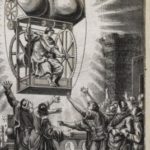
This chapter examines the use of vegetal analogy in late Renaissance physiology through the case of the German physician Daniel Sennert (1572–1637). It is centered on Sennert’s explanation of generation, in particular the transmission of life through the vegetative soul within the seed, as developed in his early works on medicine and alchemy, the…[Read more]
-
Elisabeth Moreau deposited Vegetal Analogy in Early Modern Medicine: Generation as Plant Cutting in Sennert’s Early Treatises (1611–1619) in the group
 Renaissance Science and Medicine on Humanities Commons 4 years, 8 months ago
This chapter examines the use of vegetal analogy in late Renaissance physiology through the case of the German physician Daniel Sennert (1572–1637). It is centered on Sennert’s explanation of generation, in particular the transmission of life through the vegetative soul within the seed, as developed in his early works on medicine and alchemy, the…[Read more]
-

Paul Michael Kurtz deposited The Philological Apparatus: Science, Text, and Nation in the Nineteenth Century in the group
Science Studies and the History of Science on Humanities Commons 4 years, 8 months agoPhilology haunts the humanities, through both its defendants and its detractors. This article examines the construction of philology as the premier science of the long nineteenth century in Europe. It aims to bring the history of philology up to date by taking it seriously as a science and giving it the kind of treatment that has dominated the…[Read more]
-
Paul Michael Kurtz deposited The Philological Apparatus: Science, Text, and Nation in the Nineteenth Century in the group
Historiography on Humanities Commons 4 years, 8 months agoPhilology haunts the humanities, through both its defendants and its detractors. This article examines the construction of philology as the premier science of the long nineteenth century in Europe. It aims to bring the history of philology up to date by taking it seriously as a science and giving it the kind of treatment that has dominated the…[Read more]
-
Scott Oldenburg deposited A Weaver-Poet and the Plague: Labor, Poverty and the Household in Shakespeare’s London in the group
Renaissance / Early Modern Studies on Humanities Commons 4 years, 8 months agoWilliam Muggins, an impoverished but highly literate weaver-poet, lived and wrote in London at the turn of the seventeenth century, when few of his contemporaries could even read. A Weaver-Poet and the Plague’s microhistorical approach uses Muggins’s life and writing, in which he articulates a radical vision of a commonwealth founded on labor and…[Read more]
-
Scott Oldenburg deposited Thomas Tusser and the Poetics of the Plow in the group
Renaissance / Early Modern Studies on Humanities Commons 4 years, 8 months agoThis essay argues that Thomas Tusser’s popular book of georgic verse, Five Hundred Points of Good Husbandry, offered a counter to developments in courtly poetry under Elizabeth I. Critics have long disparaged Tusser’s poetry as naïvely rustic, but Tusser was not an uneducated peasant who happened to pick up enough literacy to pen a book of poem…[Read more]
-

Ernesto Priego posted an update in the group
Medical Humanities on Humanities Commons 4 years, 8 months agoFrom Monday 24 May 2021, The Comics Grid: Journal of Comics Scholarship will only consider submissions in response to our ongoing calls for papers. Full info: https://www.comicsgrid.com/news/446/
- Load More
Open access, open source, open to all
