


-

Meredith Warren deposited Queering Jesus: LGBTQI Dangerous Remembering and Imaginative Resistance in the group
 Feminist Humanities on Humanities Commons 4 years, 12 months ago
Queering Jesus is a call to remember the danger of the story of Jesus. The primary aim of this article is to offer a comprehensive survey of the representation of queer Jesus. Building upon the deconstructive work of Johannes Baptist Metz and the notion of the dangerous memories of Jesus’s suffering and death (memoria passsionis), this article t…[Read more]
-
Meredith Warren deposited “Accused of a Sodomy Act”: Bible, Queer Poetry and African Narrative Hermeneutics in the group
Feminist Humanities on Humanities Commons 4 years, 12 months agoThis article explores the role of poetry and narrative methods in African-centred queer biblical studies and theology. As a case in point, it presents a poem, titled “Accused of a Sodomy Act,” by Tom Muyunga-Mukasa, that was written as part of a queer Bible reading project with Ugandan LGBTQ refugees. The poem is a contemporary re-telling of the…[Read more]
-
Meredith Warren deposited The Harm Principle and Christian Belief in the group
Feminist Humanities on Humanities Commons 4 years, 12 months agoThe article addresses the question why Christians often fail to achieve even the minimum standard of secular morality. It isolates from a long list of failures the undermining and maltreatment of women and sexual minorities. It describes four types of violence – gender, epistemic, symbolic, and hermeneutic – they are made to endure. It then und…[Read more]
-
Meredith Warren deposited Editorial: Queer Theory and the Bible in the group
Feminist Humanities on Humanities Commons 4 years, 12 months agoThis special edition is a form of pride. It is a celebration of thirty years since the birth of queer theory. Of course, being queer, this was no normative conception or birth. More of an artificial insemination and fusion of gene pools, characterised by anarchy, activism, subversion, deconstruction, alongside identitarian and non-identitarian…[Read more]
-
Todd Comer deposited Pacifism as Ideological Complicity in The Big Lebowski in the group
 Film Studies on Humanities Commons 5 years ago
Abstract: Insofar as Walter identifies with this myth, his rational imperative is profoundly interrupted. However, this representational interruption also operates on a larger level. Since the film opens and closes with the western actor Sam Elliott (The Stranger) and is shot through with western stylistic motifs, it can be seen as striving toward…[Read more]
-
Malin Lidström Brock deposited Philomena and Ireland’s Mother-and-baby Homes in the group
Film Studies on Humanities Commons 5 years agoThis chapter examines the portrayal of Ireland’s mother-and-baby homes in Stephen Frear’s film Philomena (2013) and the biography on which the film is based, the British journalist Martin Sixsmith’s account of Philomena Lee’s life and search for her son, who was given up to an American couple for adoption under coercive circumstances. Enforced a…[Read more]
-
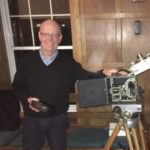
Richard Bossons deposited MAN WITH A MOVIE CAMERA: trainspotting! in the group
Film Studies on Humanities Commons 5 years agoAs with many of the Kinoks’ films trains often appear in Dziga Vertov’s 1929 masterpiece, ‘Man with a Movie Camera’. Used to create dynamism, criss-crossing the screen, often at dramatic angles, and acting as a counterpoint to previous and following scenes. Train sequences also signpost a journey to Odesa by the eponymous cameraman. The paper…[Read more]
-
Richard Bossons deposited MAN WITH A MOVIE CAMERA: the movie cameras in the group
Film Studies on Humanities Commons 5 years agoDziga Vertov’s 1929 masterpiece ‘Man with a Movie Camera’ is a staple of film studies courses and academic papers but there has been no research until now into the important ‘co-stars’ of the film, the movie cameras. This paper discusses in detail the Debrie Parvo and other cameras used by the film’s cinematographer Mikhail Kaufman.
-
Richard Bossons deposited MAN WITH A MOVIE CAMERA: the first cinema screening in the group
Film Studies on Humanities Commons 5 years agoThe definitive timeline for the early screening of Dziga Vertov’s 1929 masterpiece has been established for the first time. This illustrated paper looks at the details of the first showing of the film in Kyiv, Kharkiv, Moscow, and Germany. The earliest (pre-release) review of the film in 1928 has been translated into English for the first time,…[Read more]
-
Richard Bossons deposited MAN WITH A MOVIE CAMERA: the film locations in the group
Film Studies on Humanities Commons 5 years agoFollowing extensive research and detective work, most of the locations used in Dziga Vertov’s 1929 masterpiece have been discovered. Described by leading film academics as ‘extraordinary and exciting research’ and ‘a huge step ahead in knowledge of the film’ the paper describes each location in detail including contemporary and current views. The…[Read more]
-

Natascha Drubek deposited Filme über Vernichtung und Befreiung. Die Rhetorik der Filmdokumente aus Majdanek 1944-1945 in the group
Film Studies on Humanities Commons 5 years agoIn July 1944, the Red Army was advancing through Eastern Poland when they discovered the first traces of the camps. On reaching Lublin they found an enormous compound behind barbed wire in the city’s suburb of Majdanek. Embedded with the Soviet army were film crews, who made the first images of a Nazi camp, among them the “flight survivors” Olga a…[Read more]
-

Mark Sample deposited ENG 296 – Science Fiction (Spring 2021) in the group
 TC Popular Culture on MLA Commons 5 years ago
The syllabus for science fiction course offered Spring 2021 in the English Department at Davidson College.
-

Yomaira Figueroa started the topic MLA 2022 CFP: Afro-Diasporic Afterlives & Archipelagos Across the Global Hispano in the discussion
 Interdisciplinary Approaches to Culture and Society on MLA Commons 5 years ago
We invite 250-word abstracts for papers that examine the legacies, archives, and memories of slavery and Afro-diasporic afterlives across the global Hispanophone and archipelagic Mediterranean, Pacific, and Atlantic worlds. The panel also seeks to establish connections between these different regions and/or follow the moment of racialized actors…[Read more]
-
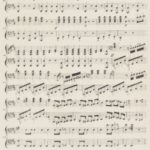
Gerard Holmes deposited “‘The Bird / Who Sings the Same, Unheard, / As Unto Crowd —’: Dickinson, Birdsong, and the Business of Improvisation” in the group
TC Popular Culture on Humanities Commons 5 years agoBirds are everywhere in nineteenth-century American literature, including the work of Emily Dickinson. Women poets often referred to their poems in terms of making songs. This essay rethinks the birds in Dickinson’s letters and poems. It suggests that Dickinson’s birds, and their songs, show her awareness of business. They exist within com…[Read more]
-

Pruritus Migrans deposited CORVIDS in the group
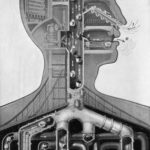 Medical Humanities on Humanities Commons 5 years ago
CORVIDS * QRt by PRURITUS MIGRANS * CC: BY-NC-SA
-
Anne Eakin Moss deposited The Camera Shot and the Gun Sight in the group
Film Studies on Humanities Commons 5 years agoThis article examines the link posited by Virilio and others between the camera shot and gun shot, arguing that this link operates differently in the context of Soviet vs. Western fantasies of agency, community and technology. Comparing THE LOST PATROL (USA 1934, John Ford) with TRINADTSAT (THIRTEEN, UdSSR 1936, Mikhail Romm), it asks what kind of…[Read more]
-

Sérgio Dias Branco deposited Laughing in Friendship: The Intimate Ensemble Comedy of “Friends” in the group
Film Studies on Humanities Commons 5 years, 1 month agoThis paper analyses the sitcom “Friends” (1994-2004) and its performance motifs.
-
Sérgio Dias Branco deposited Being Her/She in “Who Are You?” in the group
Film Studies on Humanities Commons 5 years, 1 month agoAnalysis of the episode from television series “Buffy the Vampire Slayer”, “Who Are You?” (4.16).
-
Sérgio Dias Branco deposited “The Urban and the Domestic: Spaces of American Film Noir” in the group
Film Studies on Humanities Commons 5 years, 1 month agoUrban and domestic spaces are at the core of the American film noir developed in the 1940s and 50s. The connection between such spaces and noir cannot be considered only as motivational (an association between city and crime) or protective (a separation between home and violence). The context of this genre must be considered more largely as the…[Read more]
-
Sérgio Dias Branco deposited “The Class of Images: Sketch for a Research Project” in the group
Film Studies on Humanities Commons 5 years, 1 month agoThe concept of class has been progressively erased in contemporary discussions around art — and other topics. The explanatory power of this economic and social category, as articulated by Karl Marx, has been annulled precisely at a time when the contradictions of late capitalism are growing, composing an ideological background that creates c…[Read more]
- Load More
Open access, open source, open to all


