


Luís Henriques
,@luiscfhenriques
75
Following
47
Followers
-
Luís Henriques deposited Pedro de Cristo: Missa Salve Regina (Benedictus) on Humanities Commons 8 years, 8 months ago
The Benedictus section for three voices (SAT) from Portuguese composer Pedro de Cristo’s (c.1550-1617) Missa “Salve Regina” for four voices (SAAT). This mass was probably based in a polyphonic model, thus being a so-called “Parody Mass”, although its model is yet to be found. It could also have been just based on the chant of the antiphon, thus…[Read more]
-
Luís Henriques deposited Estêvão Lopes Morago: Quem vidistis Pastores? on Humanities Commons 8 years, 8 months ago
The third responsory for Christmas Matins “Quem vidistis, Pastores?”, for four voices (SATB), by composer Estêvão Lopes Morago (c.1575-c.1630), performed by Ensemble da Sé de Angra (dir. Luís Henriques) in the August 3rd concert of the festival “Iberian Music 16th & 17th Centuries”, in the Church of Misericórdia, Angra do Heroísmo (Terceira, Azores).
-
Luís Henriques deposited Estêvão Lopes Morago: Quem vidistis, Pastores? on Humanities Commons 8 years, 8 months ago
The third responsory for Christmas Matins “Quem vidistis, Pastores?”, for four voices (SATB), by composer Estêvão Lopes Morago (c.1575-c.1630), performed by Ensemble da Sé de Angra (dir. Luís Henriques) in the July 30th concert of the festival “Iberian Musica 16th & 17th Centuries”, in the Church of Nossa Senhora da Guia, Convent of São Fran…[Read more]
-
Luís Henriques deposited Church of Santo Antão, Évora in the group
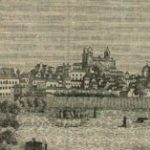 Music in Évora studies on Humanities Commons 8 years, 8 months ago
The Church of Santo Antão is located in the Praça do Giraldo, the main square of Évora. It was built in the mid-sixteenth century by Cardinal D. Henrique Archbishop of Évora. This church was one of the most important musical centres of the city with the Cathedral’s mestre da Claustra Manuel Mendes (c.1547-1605) (chapel master in Santo Antão) as o…[Read more]
-
Luís Henriques deposited Estêvão Lopes Morago: O salutaris Hostia on Humanities Commons 8 years, 8 months ago
Motet “O salutaris Hostia” for four voices (SATB) by composer Estêvão Lopes Morago (c.1575-c.1630), performed by Ensemble da Sé de Angra (dir. Luís Henriques) in the July 30th concert of the festival “Iberian Music 16th & 17th Centuries”, in the Church of Nossa Senhora da Guia, Convent of São Francisco, Angra do Heroísmo (Terceira, Azores).
-
Luís Henriques deposited Estêvão Lopes Morago: O bone Jesu on Humanities Commons 8 years, 8 months ago
Motet “O bone Jesu” for four voices (SATB) by composer Estêvão Lopes Morago (c.1575-c.1630), performed by Ensemble da Sé de Angra (dir. Luís Henriques) in the July 30th concert of the festival “Iberian Music 16th & 17th Centuries”, in the Church of Nossa Senhora da Guia, Convent of São Francisco, Angra do Heroísmo (Terceira, Azores).
-
The Church of Santo Antão is located in the Praça do Giraldo, the main square of Évora. It was built in the mid-sixteenth century by Cardinal D. Henrique Archbishop of Évora. This church was one of the most important musical centres of the city with the Cathedral’s mestre da Claustra Manuel Mendes (c.1547-1605) (chapel master in Santo Antão) as o…[Read more]
-
Luís Henriques deposited Concerto Comentado “Polifonia Sacra Portuguesa dos Séculos XVI & XVII” on Humanities Commons 8 years, 8 months ago
Entrevista e reportagem do Telejornal da RTP-Açores, de 23 de Setembro de 2012, a propósito do Concerto Comentado “Polifonia Sacra Portuguesa dos Séculos XVI & XVII” realizado pelo Ensemble da Sé de Angra (dir. e comentários de Luís Henriques) na Biblioteca Pública e Arquivo Regional de Angra do Heroísmo, a 20 de Setembro de 2012.
-
Luís Henriques deposited Estêvão de Brito: Ego dilecto meo on Humanities Commons 8 years, 8 months ago
Preview of the edition of Portuguese composer Estêvão de Brito’s (c.1575-1641) motet Ego dilecto meo for five voices (SSATB). Polyphonia 31. Work is fully available at http://mpmp.pt/produto/poly31/
-
Luís Henriques deposited Polifonia Sacra Portuguesa dos séculos XVI e XVII on Humanities Commons 8 years, 8 months ago
Introdução ao concerto comentado, intitulado “Polifonia Sacra Portuguesa do século XVI e XVII”, realizado pelo Ensemble da Sé de Angra (dir. Luís Henriques) na Biblioteca Pública e Arquivo Regional de Angra do Heroísmo a 20 de Setembro de 2012.
-
Luís Henriques deposited Commune Confessoris Pontificis: Jesu Redemptor omnium… perpes corona on Humanities Commons 8 years, 8 months ago
Hymn “Jesu Redemptor omnium… perpes corona” for the office of Lauds for the Common of a Common of a Confessor Pontifice (In Commune Confessoris Pontificis). The eighteenth-century Hinary P-AHc MM 388, extant at the Musical Fund of the Capitular Archive of Angra Cathedral was used for this performance.
-
Luís Henriques deposited Diogo Dias Melgaz: Salve Regina in the group
Music in Évora studies on Humanities Commons 8 years, 8 months agoPreview of the edition of Portuguese composer Diogo Dias Melgaz’s (1638-1700) motet Salve Regina for four voices (SATB). Polyphonia 30. Work is fully available at http://mpmp.pt/produto/polyphonia-30-melgaz-salve-regina/
-
Luís Henriques deposited Church of Nossa Senhora da Conceição on Humanities Commons 8 years, 8 months ago
The Church Matriz of Nossa Senhora da Conceição was built in the last decades of the eighteenth century, work continued during the nineteenth century. It is the biggest church in the island of Flores, in the Azores archipelago. It is also the main church of the village of Santa Cruz. Most of the altarpieces and imagery are l…[Read more]
-
Luís Henriques deposited Diogo Dias Melgaz: Salve Regina on Humanities Commons 8 years, 8 months ago
Preview of the edition of Portuguese composer Diogo Dias Melgaz’s (1638-1700) motet Salve Regina for four voices (SATB). Polyphonia 30. Work is fully available at http://mpmp.pt/produto/polyphonia-30-melgaz-salve-regina/
-
Preview of the edition of edition of Portuguese composer Diogo Dias Melgaz’s (c.1638-1700) improperia Popule meus for two choirs (SATB/SATB). Polyphonia 27. Work fully available at http://mpmp.pt/produto/polyphonia-27-melgaz-popule-meus/
-
Luís Henriques deposited Entrevista para o Programa “Açores-Hoje” on Humanities Commons 8 years, 8 months ago
Entrevista para o programa da RTP-Açores “Açores-Hoje” a propósito do Festival “Música Ibérica Séculos XVI & XVII”, que decorreu em Angra do Heroísmo e Praia da Vitória (ilha Terceira, Açores) de 28 de Julho a 5 de Agosto de 2012. Participação do Coro da Sé de Angra, Ensemble da Sé de Angra e organistas Ricardo Toste e Nelson Pereira.
-
Luís Henriques deposited Festival “Música Ibérica Séculos XVI & XVII” on Humanities Commons 8 years, 8 months ago
Festival “Música Ibérica Séculos XVI & XVII” realizado nas cidades de Angra do Heroísmo e Praia da Vitória (Terceira, Açores) entre 28 de Julho e 5 de Agosto de 2012. Contou com a participação do Ensemble da Sé de Angra e do Coro da Sé de Angra, dirigidos por Luís Henriques, e pelos organistas Ricardo Toste e Nelson Pereira.
-
Luís Henriques deposited O ofício de Matinas para Festa de São Bernardo: O testemunho do manuscrito P-AR Ms 25 on Humanities Commons 8 years, 8 months ago
O mosteiro de S. Pedro e S. Paulo de Arouca constituiu-se no início do século XIII como uma das mais importantes casas femininas da Ordem de Cister em Portugal. Deste mosteiro sobrevivem uma série de fontes de cantochão de inestimável valor e que permitem vislumbrar a riqueza da sua liturgia musical. Pretende-se, através do estudo compa…[Read more]
-
Luís Henriques deposited Estêvão Lopes Morago: Oculi mei semper ad Dominum on Humanities Commons 8 years, 8 months ago
The 4-voice (SATB) motet “Oculi mei semper ad Dominum” of composer Estêvão Lopes Morago (c.1575-c.1630) was recorded by Ensemble Eborensis in Évora Museum, August 2014, following the edition of this work prepared for the “Polyphonia” series (n.º 8) published in 2012 by Movimento Patrimonial pela Música Portuguesa.
-
Luís Henriques deposited The Azores Archipelago in the Cantino Planisphere on Humanities Commons 8 years, 8 months ago
The Cantino planishpere is the earliest surviving map showing Portuguese geographic discoveries in the east and west. It is named after Alberto Cantino, an agent for the Duke of Ferrara, who successfully smuggled it from Portugal to Italy in 1502. The map is particularly notable for portraying a fragmentary record of the Brazilian coast and for…[Read more]
- Load More