


-

Andrew Jacobs deposited Interpreting conversion in antiquity (and beyond) in the group
 Ancient Jew Review on Humanities Commons 4 years, 7 months ago
This essay explores the persistent scholarly desires and motivations that structure the historical study of conversion in religious studies. Most “conversion studies” take a phenomenological approach, which acknowledges the diverse processes, contexts, and meanings of conversion but nonetheless sees the phenomenon as a way to access the con…[Read more]
-

Ian Wilson deposited Review of ‘Even God Cannot Change the Past’: Reflections on Seventeen Years of the European Seminar in Historical Methodology, ed. Lester L. Grabbe in the group
 Biblical Studies on Humanities Commons 4 years, 9 months ago
Review of said book.
-
Ian Wilson deposited Review of ‘Even God Cannot Change the Past’: Reflections on Seventeen Years of the European Seminar in Historical Methodology, ed. Lester L. Grabbe in the group
 Ancient Near East on Humanities Commons 4 years, 9 months ago
Review of said book.
-
Ian Wilson deposited Review of ‘Even God Cannot Change the Past’: Reflections on Seventeen Years of the European Seminar in Historical Methodology, ed. Lester L. Grabbe in the group
Ancient Jew Review on Humanities Commons 4 years, 9 months agoReview of said book.
-
Ian Wilson deposited Remembering Kingship: Samuel’s Contributions to Postmonarchic Culture in the group
Biblical Studies on Humanities Commons 4 years, 9 months agoKingship has been a political mainstay in human history, even when peoples have lacked monarchic rulers. This essay examines the book of Samuel as a source for the cultural history of ancient Judah, focusing on the question of how Samuel’s representations of monarchy would function for its readers in the early Second Temple era. In this era, w…[Read more]
-
Ian Wilson deposited Remembering Kingship: Samuel’s Contributions to Postmonarchic Culture in the group
Ancient Near East on Humanities Commons 4 years, 9 months agoKingship has been a political mainstay in human history, even when peoples have lacked monarchic rulers. This essay examines the book of Samuel as a source for the cultural history of ancient Judah, focusing on the question of how Samuel’s representations of monarchy would function for its readers in the early Second Temple era. In this era, w…[Read more]
-
Ian Wilson deposited Remembering Kingship: Samuel’s Contributions to Postmonarchic Culture in the group
Ancient Jew Review on Humanities Commons 4 years, 9 months agoKingship has been a political mainstay in human history, even when peoples have lacked monarchic rulers. This essay examines the book of Samuel as a source for the cultural history of ancient Judah, focusing on the question of how Samuel’s representations of monarchy would function for its readers in the early Second Temple era. In this era, w…[Read more]
-
Ian Wilson deposited Ezekiel as a Written Text: Archiving Visions, Remembering Futures in the group
Biblical Studies on Humanities Commons 4 years, 9 months agoThis chapter focuses on Ezekiel as a text, i.e., a collection of writings meant to be read again and again. As a text, it presents a range of ideas in dialogue with one another—and sometimes in tension—thus providing ample space for continual discussion and reinterpretation of its ideas among its original communities of readers in antiquity. Eze…[Read more]
-
Ian Wilson deposited Ezekiel as a Written Text: Archiving Visions, Remembering Futures in the group
Ancient Near East on Humanities Commons 4 years, 9 months agoThis chapter focuses on Ezekiel as a text, i.e., a collection of writings meant to be read again and again. As a text, it presents a range of ideas in dialogue with one another—and sometimes in tension—thus providing ample space for continual discussion and reinterpretation of its ideas among its original communities of readers in antiquity. Eze…[Read more]
-
Ian Wilson deposited Ezekiel as a Written Text: Archiving Visions, Remembering Futures in the group
Ancient Jew Review on Humanities Commons 4 years, 9 months agoThis chapter focuses on Ezekiel as a text, i.e., a collection of writings meant to be read again and again. As a text, it presents a range of ideas in dialogue with one another—and sometimes in tension—thus providing ample space for continual discussion and reinterpretation of its ideas among its original communities of readers in antiquity. Eze…[Read more]
-

Nick Posegay deposited Hissing, Gnashing, Piercing, Cracking: Naming Vowels in Medieval Hebrew in the group
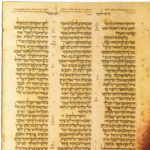 Hebrew Bible / Old Testament on Humanities Commons 4 years, 9 months ago
The modern names for the Hebrew vowels (qameṣ, pataḥ, segol, ṣere, ḥiriq/ḥireq, ḥolem, shuruq/shureq, qibbuṣ/qubbuṣ) are derived from a variety of medieval sources. The pair of qameṣ and pataḥ are the oldest, both having evolved in the earliest stages of Masoretic analysis of vocalisation. The remaining names are products of three different…[Read more]
-
Pamela Barmash deposited Blood Feud and State Control: Differing Legal Institutions for the Remedy of Homicide During the Second and First Millennia B.C.E. in the group
Hebrew Bible / Old Testament on Humanities Commons 4 years, 9 months agoSince the discovery of the Laws of Hammurapi in December 1901–January 1902,1
the dependence of biblical law upon Mesopotamian law has been hotly debated. Among
the most contentious issues is the abjudication of homicide, and the discussion has focused
on particular odd cases in biblical law, such as an ox that gored or assault on a p…[Read more] -
Pamela Barmash deposited Blood Feud and State Control: Differing Legal Institutions for the Remedy of Homicide During the Second and First Millennia B.C.E. in the group
Biblical Studies on Humanities Commons 4 years, 9 months agoSince the discovery of the Laws of Hammurapi in December 1901–January 1902,1
the dependence of biblical law upon Mesopotamian law has been hotly debated. Among
the most contentious issues is the abjudication of homicide, and the discussion has focused
on particular odd cases in biblical law, such as an ox that gored or assault on a p…[Read more] -
Pamela Barmash deposited Blood Feud and State Control: Differing Legal Institutions for the Remedy of Homicide During the Second and First Millennia B.C.E. in the group
Ancient Near East on Humanities Commons 4 years, 9 months agoSince the discovery of the Laws of Hammurapi in December 1901–January 1902,1
the dependence of biblical law upon Mesopotamian law has been hotly debated. Among
the most contentious issues is the abjudication of homicide, and the discussion has focused
on particular odd cases in biblical law, such as an ox that gored or assault on a p…[Read more] -
Pamela Barmash deposited Blood Feud and State Control: Differing Legal Institutions for the Remedy of Homicide During the Second and First Millennia B.C.E. in the group
Ancient Jew Review on Humanities Commons 4 years, 9 months agoSince the discovery of the Laws of Hammurapi in December 1901–January 1902,1
the dependence of biblical law upon Mesopotamian law has been hotly debated. Among
the most contentious issues is the abjudication of homicide, and the discussion has focused
on particular odd cases in biblical law, such as an ox that gored or assault on a p…[Read more] -

James M. Tucker deposited Digital Editions of the Scrolls and Fragments of the Judaean Desert: Preliminary Thoughts in the group
Biblical Studies on Humanities Commons 4 years, 9 months agoThe completion of the editio princeps of the and fragments and manuscripts marks a watershed in the history of Qumran and Dead Sea Scrolls research. In addition to the DJD volumes, the recent update of the Leon Levy Digital Dead Sea Scrolls Library offers free access to its color images. These resources, among others, will continue to exist as…[Read more]
-
Pamela Barmash deposited Ancient Near Eastern Law in the group
Hebrew Bible / Old Testament on Humanities Commons 4 years, 10 months agoAncient Near Eastern Law. The oldest documented law comes from the ancient Near East. The earliest legal texts come from about 2600 B.C.E., a few hundred years after the invention of writing, and they predate by millennia the documentation for law from the other early civilizations of China and India.
-
Pamela Barmash deposited Ancient Near Eastern Law in the group
Biblical Studies on Humanities Commons 4 years, 10 months agoAncient Near Eastern Law. The oldest documented law comes from the ancient Near East. The earliest legal texts come from about 2600 B.C.E., a few hundred years after the invention of writing, and they predate by millennia the documentation for law from the other early civilizations of China and India.
-
Pamela Barmash deposited Ancient Near Eastern Law in the group
Ancient Near East on Humanities Commons 4 years, 10 months agoAncient Near Eastern Law. The oldest documented law comes from the ancient Near East. The earliest legal texts come from about 2600 B.C.E., a few hundred years after the invention of writing, and they predate by millennia the documentation for law from the other early civilizations of China and India.
-
Pamela Barmash deposited Ancient Near Eastern Law in the group
Ancient Jew Review on Humanities Commons 4 years, 10 months agoAncient Near Eastern Law. The oldest documented law comes from the ancient Near East. The earliest legal texts come from about 2600 B.C.E., a few hundred years after the invention of writing, and they predate by millennia the documentation for law from the other early civilizations of China and India.
- Load More
Open access, open source, open to all
