


-

Ellie Bennett deposited The ‘Queens of the Arabs’ During the Neo-Assyrian Period in the group
 Women in Antiquity on Humanities Commons 2 years, 4 months ago
During the Neo-Assyrian period (approximately 934-612 BCE, based in modern Iraq) the annals and royal inscriptions of several kings mention women with a curious title: ‘Queen of the Arabs’. These women have been included in previous discussions regarding Assyrian interaction with the ‘Arabs’, but a full investigation into their roles as rulers…[Read more]
-
Ellie Bennett deposited The ‘Queens of the Arabs’ During the Neo-Assyrian Period in the group
 Ancient Near East on Humanities Commons 2 years, 4 months ago
During the Neo-Assyrian period (approximately 934-612 BCE, based in modern Iraq) the annals and royal inscriptions of several kings mention women with a curious title: ‘Queen of the Arabs’. These women have been included in previous discussions regarding Assyrian interaction with the ‘Arabs’, but a full investigation into their roles as rulers…[Read more]
-

Lloyd Graham deposited A life in the balance: Divine judgement by weighing in the group
Ancient Near East on Humanities Commons 2 years, 4 months agoThis paper compares psychostasia and/or kerostasia concepts from Indo-European, Semitic and adjacent cultures, and relates them to Cognitive Metaphor Theory. In the context of metaphysical weighing, the religions of ancient Egypt, Greece and Rome all associated lightness with goodness and/or a favourable outcome; Hinduism does likewise. The…[Read more]
-
Lloyd Graham deposited A life in the balance: Divine judgement by weighing in the group
Ancient Greece & Rome on Humanities Commons 2 years, 4 months agoThis paper compares psychostasia and/or kerostasia concepts from Indo-European, Semitic and adjacent cultures, and relates them to Cognitive Metaphor Theory. In the context of metaphysical weighing, the religions of ancient Egypt, Greece and Rome all associated lightness with goodness and/or a favourable outcome; Hinduism does likewise. The…[Read more]
-

Julia Rhyder deposited “The Commemoration of War in Early Jewish Festivals.” Bible Odyssey. 2021. https://www.bibleodyssey.org/en/passages/related-articles/commemoration-of-war-in-early-jewish-festivals in the group
Ancient Near East on Humanities Commons 2 years, 4 months agoThe emergence of Judaism and Samaritanism in antiquity is closely linked to the process by which the Pentateuch (the first five books of the Hebrew Bible) became defined as the Torah of Moses.
-
Ellie Bennett posted an update in the group
Ancient Near East on Humanities Commons 2 years, 4 months agoCALL FOR PAPERS: The sixth Gender and Methodology in the Ancient Near East (GeMANE 6) will take place as a hybrid event in Malta 8–11 April, 2024. Check the website (https://www.um.edu.mt/events/gemane6workshop2024/callforpapers/) for more information and the full call for papers text. Deadline for abstracts (300-500 words) is 15th October.
-

Henning Ohst deposited Zeitschriftenschau Fachwissenschaft (Mnemosyne 76.3, 2023/WS 135, 2022), Forum Classicum 66, 2023, 148–151 in the group
 Classical Tradition on Humanities Commons 2 years, 4 months ago
More detailed discussions on Thomas Biggs: Sown Men and Rome’s Civil Wars. Rethinking the End of Melinno’s Hymn to Rome (Mnemosyne 76.3) and Gerlinde Bretzigheimer: Intertextualität und Intratextualität in Ausonius’ Epitaphia heroum (Wiener Studien 135).
-

Christopher Crosbie deposited Francis Bacon and Aristotelian Afterlives in the group
Classical Tradition on Humanities Commons 2 years, 5 months agoThe Baconian oeuvre remains the most extensive and influential assault on Aristotelianism in English writing of the early modern period. Where convention respected Aristotelian logic as a viable instrument for studying natural philosophy, Bacon instead sought to initiate an instauration, or restoration, of learning by proposing his inductive…[Read more]
-

Danijela Tešić Radovanović deposited Some Aspects of Decorations on Early Christian Lamps from the Central Balkans, in the group
Ancient Greece & Rome on Humanities Commons 2 years, 5 months agoThis paper aims to examine models by which symbolism of light and lamp in
the Mediterranean region was manifested in the early Christian visual culture,
i.e. lamp representations from Central Balkans. Lamps with Early
Christian representations are considered in the context of transculturality
of Late Antiquity, as well as political and…[Read more] -
Julia Rhyder deposited “The Reception of Ritual Laws in the Early Second Temple Period: The Evidence of Ezra-Nehemiah and Chronicles.” Pp. 255–79 in Text and Ritual in the Pentateuch. Edited by C. Nihan and J. Rhyder. University Park: Eisenbrauns, 2021. in the group
Ancient Near East on Humanities Commons 2 years, 5 months agoThis essay examines three cases in which pentateuchal ritual law is employed in Ezra-Nehemiah and Chronicles: the Sukkôt celebration in Neh 8:13–18, Hezekiah’s Passover in 2 Chr 30, and Josiah’s Passover, in 2 Chr 35:1–19. These case studies reveal that the scribes responsible for Ezra-Nehemiah and Chronicles considered the ritual texts of the P…[Read more]
-
Julia Rhyder deposited “The Tent of Meeting as Monumental Space: The Construction of the Priestly Sanctuary in Exodus 25–31, 35–40.” Hebrew Bible and Ancient Israel 10, no. 3 (2021): 301–13. in the group
Ancient Near East on Humanities Commons 2 years, 6 months agoThis article explores how the priestly wilderness shrine functions as a monumental space in the sanctuary construction account of Exod 25–31, 35–40. It draws on spatial theory and studies of monumental architecture to identify five features of the tent of meeting that infuse it with monumentality: first, its significance in negotiating the pat…[Read more]
-
Henning Ohst deposited Greek and Latin Poetry of Late Antiquity. Form, Tradition, and Context, hg. v. Berenice Verhelst u. Tine Scheijnen (2022), Plekos 25, 2023, S. 327–339 in the group
Classical Tradition on Humanities Commons 2 years, 7 months agoThe volume under review is based on the premise that there is no real dialogue between Greek and Latin studies on the literature (and especially on the poetry) of Late Antiquity, at least not a dialogue as intense as with regard to the earlier, ‘classical’ literature. The reason for this is not least the problem that mutual dependencies between…[Read more]
-
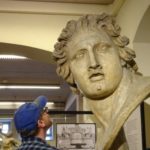
Henry Colburn deposited A Brief Historiography of Parthian Art, from Winckelmann to Rostovtzeff in the group
Ancient Near East on Humanities Commons 2 years, 7 months agoThe early history of the study of Parthian art may be profitably divided into three overlapping phases. The first phase, ‘Ordering’, begins with Johann Joachim Winckelmann’s dismissive assessment of Parthian art, at this point known mainly from coins, as derivative and barbaric. The second phase, ‘Exploration’, begins in the mid-ninet…[Read more]
-
Henry Colburn deposited A Brief Historiography of Parthian Art, from Winckelmann to Rostovtzeff in the group
Ancient Greece & Rome on Humanities Commons 2 years, 7 months agoThe early history of the study of Parthian art may be profitably divided into three overlapping phases. The first phase, ‘Ordering’, begins with Johann Joachim Winckelmann’s dismissive assessment of Parthian art, at this point known mainly from coins, as derivative and barbaric. The second phase, ‘Exploration’, begins in the mid-ninet…[Read more]
-

Mark Beumer deposited Hygieia. Identity, Cult and Reception in the group
Classical Tradition on Humanities Commons 2 years, 8 months agoThis article examines the Greek goddess Hygieia by looking at her identity, cult status in the ancient world and subsequent scholarly reception. Should she be viewed as a goddess or a personification? By studying Hygieia primarily as a concept of health within ancient medicine, as well as a personification and a goddess, it will be argued that…[Read more]
-
Mark Beumer deposited Hygieia. Identity, Cult and Reception in the group
Ancient Greece & Rome on Humanities Commons 2 years, 8 months agoThis article examines the Greek goddess Hygieia by looking at her identity, cult status in the ancient world and subsequent scholarly reception. Should she be viewed as a goddess or a personification? By studying Hygieia primarily as a concept of health within ancient medicine, as well as a personification and a goddess, it will be argued that…[Read more]
-
Mark Beumer deposited A Woman’s Touch. Hygieia, Health and Incubation in the group
Ancient Greece & Rome on Humanities Commons 2 years, 8 months agoIn this paper, I argue that Hygieia has to be viewed as a full goddess in Greek religion and medicine, with a special focus on her position within the Asklepios cult. I will examine her identity, to which scholars attribute several labels like goddess, abstraction and personification. I further argue that Hygieia’s role in performing incubation r…[Read more]
-
Mark Beumer deposited The Foundation of Anthropology to Ritual Studies in the group
Ancient Greece & Rome on Humanities Commons 2 years, 8 months agoThe present paper aims to investigate the role of anthropology in the development of Ritual Studies as an inter-disciplinary platform, with a focus on ritual dynamics by using a historiographic description, focusing on thetransition of Greco-Roman to Christian culture. This study attempts to shed light not only on the contributionof anthropology…[Read more]
-

Tatjana P. Beuthe deposited The Grammar of Ornamentation: An Egyptian Predynastic Decorative Continuum in the group
Ancient Near East on Humanities Commons 2 years, 8 months agoTags made of mudstone are predominantly found in ancient Egyptian Predynastic cemetery contexts. This study examines the symbolism and significance of mudstone tags that are crescent-shaped and/or feature the recurved horns of hartebeests. The use of syncretic imagery on these tags provides evidence for the fluidity of artistic perceptions in…[Read more]
-
Henning Ohst deposited A Companion to Isidore of Seville, hg. v. Andrew Fear u. Jamie Wood (2020), Plekos 24, 2022, S. 65–77 in the group
Classical Tradition on Humanities Commons 2 years, 8 months agoThe Companion assembles a total of twenty chapters in English throughout, which – as explained in more detail in the Introduction by the two editors – are thematically divided into three sections (“parts”): “Isidore’s Contexts” (chapters 1-4, including the “Introduction”), “Themes in Isidore’s Works” (chapters 5-13), and “Transmission andReception…[Read more]
- Load More
Open access, open source, open to all