About
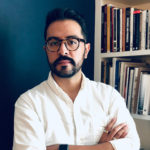
German is a PhD Candidate at the Stuart Weitzman school of Design interested in the history of modern architecture in Latin America and the United States with a focus on cultural relations, borders and politics. His work is interdisciplinary, drawing on fields such as Border and Chicano Studies, Environmental History, and Urbanism, and explores Post-colonial and De-colonial concepts that refine understandings of territories, nations, and migration as they relate to architectural and urban conditions. German has taught History & Theory courses in Mexico and the U.S.
Education
University of Pennsylvania, Weitzman School of Design. Philadelphia, PA
PhD Candidate in the History and Theory of Architecture
Dissertation: “Life on the Border: Constructing the México/U.S. Borderland.
From 1961 to 1971”
Field: Modern Architecture in the United States and Latin America. A Perspective on Cultural Relations, Borders and Politics
Master of Science
Universitat Politécnica de Catalunya, Escola Tècnica Superior d’Arquitectura de Barcelona (ETSAB). Spain
Master’s degree in Theory and Practice of Architectural Design. Approaches to Architecture from the Perspective of Historical and Social Environments
Master´s Thesis: “La Vanguardia Europea en México: La Arquitectura Expresionista del Museo Experimental El Eco / The European Avant-Garde in México: The expressionist architecture of the Museo Experimental el Eco.”
Instituto Tecnológico y de Estudios Superiores de Monterrey (ITESM). México
B.A. in Architecture
Projects
Life on the Border: Constructing the México/U.S. Borderland. 1961 to 1971
German’s dissertation situates the bi-national urban projects along the transboundary system of the México / U.S. borderlands during the 1960’s as agents of modernization. It will focus on the built environment as symbols of longstanding cooperation between countries, but also as projections of the political, socioeconomic and cultural intentions of the US’ policies to the “Third World” countries during the Cold War. The Through modern superblocks the federal programs sought to propose a model of economic and cultural development for the territory that neighbored the leading economy of the world. The programs encouraged: the development of tourism by improving the physical appearance of the border cities, an increase in exports by establishing new industrial enterprises, while also promoting a raising of the cultural standards of the population.
Rather than focusing solely on the aspects of beautification, modern nation building, and identity, German’s research is interested in the implications of the binational collaborations that this type of projects entitles, and their reception on both sides of the border. It delves on the repercussions that the imposition of foreign, though “appropriated”, urban models affects the patterns of life on the borders, and the perceived image for non-border dwellers. German’s research is interested in questions like: Can urban and architectural design contribute to reveal the complex interrelated political and social systems that exist in the borderlands? How has the built environment contributed to the increasing belief in the need for stronger divisions within the borderland, specifically at the twin cities?