


-

David Olmsted deposited Translations of Akkadian Graffiti at Wadi el-Ḥôl Egypt (1500 BCE) in the group
 Aegean and Eastern Mediterranean archaeology on Humanities Commons 3 years ago
This is the first translation of the two graffiti texts found at the exit of Wadi el-Ḥôl (“Wadi of Terror”) in the Qena bend area of Egypt. Their signs represent a transitional stage between Minoan Phaistos Disk and Linear A. These texts were found by John and Deborah Darnell during their 1993-94 excavation season (Darnell, and all 2005). Th…[Read more]
-

Jeffrey A. Becker deposited Archaeology of Mediterranean Landscapes in the group
 Classical archaeology on Humanities Commons 3 years ago
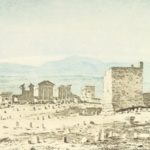
This course offers a survey of the archaeology of settled landscapes in the ancient Mediterranean world,
including both the ancient Near East and the Mediterranean basin. In particular, the course will focus on
city-country dichotomies in order to study the patterns of development, demography, and land use in
selected case study areas. While…[Read more] -
Jeffrey A. Becker deposited Roman art: an introduction in the group
Classical archaeology on Humanities Commons 3 years agoThis course provides an introduction to the visual culture and art forms of the Italo-Roman world from the
Early Iron Age to the beginning of Late Antiquity. The course examines the developmental arcs of art
forms in various spheres (public, private, sacred, funereal) and considers key media (sculpture, painting,
mosaic, decorative arts).…[Read more] -
David Olmsted deposited Lachish Ivory Comb Text Translation From Minoan Linear A (1650 BCE) in the group
Near Eastern Archaeology on Humanities Commons 3 years, 2 months agoThe text signs on this comb are Minoan Linear A and not the Proto-Canaanite of Serabit el-Khadim as claimed in its 2022 archaeology report. Like most pre-classical linear texts found by archaeology, the language of this text is Akkadian which was the language of the Neolithic farming culture which spread into Europe from the Near-East starting…[Read more]
-

Julia Rhyder deposited “Festivals and Violence in 1 and 2 Maccabees: Hanukkah and Nicanor’s Day,” Hebrew Bible and Ancient Israel, 10, no. 1 (2021): 63–76. in the group
Ancient Near East on Humanities Commons 3 years, 3 months agoThis article analyzes the nexus between collective violence, temple violation, and military glory in 1 and 2 Maccabees by comparing two festivals established in the context of revolt and guerilla warfare; namely, Hanukkah and Nicanor’s Day. It argues that the accounts of the origins of these two festivals in 1 and 2 Maccabees reinforce the close c…[Read more]
-

Howard Williams deposited Rethinking Wat’s Dyke: A Monument’s Flow in a Hydraulic Frontier Zone in the group
 Archaeology on Humanities Commons 3 years, 3 months ago
Britain’s second-longest early medieval monument – Wat’s Dyke – was a component of an early medieval hydraulic frontier zone rather than primarily serving as a symbol of power, a fixed territorial border or a military stop-line. Wat’s Dyke was not only created to monitor and control mobility over land, but specifically did so through its careful a…[Read more]
-
Howard Williams deposited Drawing the Line: What’s What’s Dyke? Practice and Process in the group
Archaeology on Humanities Commons 3 years, 3 months agoOften neglected and misunderstood, there are considerable challenges to digital and real-world public engagement with Britain’s third-longest linear monument, Wat’s Dyke (Williams 2020a). To foster public education and understanding regarding of Wat’s Dyke’s relationship to the broader story of Anglo-Welsh borderlands, but also to encoura…[Read more]
-
Howard Williams deposited What’s Wat’s Dyke? Wrexham Comic Heritage Trail in the group
Archaeology on Humanities Commons 3 years, 3 months agoWe hope this comic heritage trail for Wrexham helps introduce you to Britain’s third-longest ancient monument
-
Howard Williams deposited Collaboratory through Crises: Researching Linear Monuments in 2021 in the group
Archaeology on Humanities Commons 3 years, 3 months agoThis article introduces the third volume of the Offa’s Dyke Journal (ODJ). As well as reviewing ODJ 3’s contents, I present reviews of the journal received to date, notable new publications on linear monuments, and the Collaboratory’s key activities during 2021. The context and significance of the research network’s ongoing endeavours are present…[Read more]
-
Howard Williams deposited Destroy the ‘Sutton Hoo Treasure’! in the group
Archaeology on Humanities Commons 3 years, 3 months agoThis chapter presents a survey and critique of the use of ‘treasure(s)’ to describe the burial assemblage from the Mound 1 ship-burial at Sutton Hoo since its discovery in 1939. I argue that referring to the contents of Mound 1 as ‘treasure(s)’ is not merely misrepresenting, commodifying and sensationalising its funerary context and wider signifi…[Read more]
-
Howard Williams deposited Introduction: the Public Archaeology of Treasure in the group
Archaeology on Humanities Commons 3 years, 3 months agoSetting the stage for The Public Archaeology of Treasure, this chapter presents the complex intersections of ‘treasure’ in archaeological teaching and research and archaeology’s interactions with a range of different publics on local, regional, national and international scales. The chapter also identifies the global issues in heritage conse…[Read more]
-
Howard Williams deposited Dai Morgan Evans: a life in archaeology in the group
Archaeology on Humanities Commons 3 years, 3 months agoIntroduction to the collected essays of Professor Dai Morgan Evans
-
Lloyd Graham deposited Pre-Christian Ruins as Reservoirs of Supernatural Agency in Egypt, Ireland and Peru in the group
Archaeology on Humanities Commons 3 years, 3 months agoThis note outlines several features common to the reception of ancient ruins by the Christian populations of three countries, each located on a different continent. Most of the sites were and are strongly associated with the realm of the dead. Fear of misadventure or calamity typically inspired a respectful avoidance of such pre-Christian sites…[Read more]
-
Marco De Pietri deposited Messengers and Envoys within Egyptian-Hittite Relationships in the group
Ancient Near East on Humanities Commons 3 years, 4 months agoSeveral documents from Egypt and Ḫatti (especially the Amarna letters and the Egyptian-Hittite correspondence) mention envoys and messengers in charge of diplomatic contacts between the two countries. Cuneiform and hieroglyphic transcriptions of Egyptian names at Ugarit hint at an actual presence (in Ugarit and Karkemish) of officials coming f…[Read more]
-

Luis de Orueta deposited A Dictionary of Spanish Place Names in the group
Cultural Heritage on Humanities Commons 3 years, 4 months agoA selection of more than 5000 place Spanish Names from the Iberian Peninsula, presented in alphabetic order and showing their meaning when well established, or listing the known alternatives in cases where a single etymology cannot be ascertained.
-
Luis de Orueta created the doc A Dictionary of Spanish Place Names in the group
Cultural Heritage on Humanities Commons 3 years, 4 months ago -
Justin Walsh deposited Automated identification of astronauts on board the International Space Station: A case study in space archaeology in the group
Archaeology on Humanities Commons 3 years, 5 months agoWe develop and apply a deep learning-based computer vision pipeline to automatically identify crew members in archival photographic imagery taken on-board the International Space Station. Our approach is able to quickly tag thousands of images from public and private photo repositories without human supervision with high degrees of accuracy,…[Read more]
-

Jonas Richter deposited Götter-Astronauten. Erich von Däniken und die Paläo-SETI-Mythologie (Volltext) in the group
Archaeology on Humanities Commons 3 years, 5 months agoGERMAN: Waren die Götter Astronauten? Davon ist Erich von Däniken überzeugt. Der erfolgreiche Autor ist seit Jahrzehnten der einflussreichste Protagonist auf dem Gebiet der Paläo-SETI bzw. Prä-Astronautik, einer grenzwissenschaftlichen Laienforschung, die die Position vertritt, dass Außerirdische vor Urzeiten die Erde besucht und die Entwi…[Read more]
-

Matthew Suriano deposited The Privilege of the Living in Caring for the Dead: A Problem of Reciprocity in the group
Near Eastern Archaeology on Humanities Commons 3 years, 5 months agoWhat was the significance of ancestors in the Hebrew Bible? The question is spurred by Kerry Sonia’s Caring for the Dead, which argues that the cult of dead kin was an accepted practice in the culture of the biblical writers. In building this thesis, Sonia resists an idea popular in scholarship that the Hebrew Bible promotes a negative view of r…[Read more]
-
Matthew Suriano deposited The Privilege of the Living in Caring for the Dead: A Problem of Reciprocity in the group
Ancient Near East on Humanities Commons 3 years, 5 months agoWhat was the significance of ancestors in the Hebrew Bible? The question is spurred by Kerry Sonia’s Caring for the Dead, which argues that the cult of dead kin was an accepted practice in the culture of the biblical writers. In building this thesis, Sonia resists an idea popular in scholarship that the Hebrew Bible promotes a negative view of r…[Read more]
- Load More
Open access, open source, open to all
