


-

James M. Harland deposited Imagining the Saxons in Late Antique Gaul in the group
 Archaeology on Humanities Commons 5 years, 12 months ago
Published in Sächsische Leute und Länder Benennung und Lokalisierung von Gruppenidentitäten im ersten Jahrtausend, and a considerably expanded version of a paper delivered at the Internationales Sachsensymposion in Leipzig, 2015.
The article considers the literary representation of Saxons in the works of the late antique authors Sidonius Ap…[Read more]
-
Ben Newbound deposited The arrangement of tablets on the photographic plates of Scripta Minoa II in the group
Archaeology on Humanities Commons 6 years agoIllustration of various features in the arrangement of Linear B tablets in the photo plates of Scripta Minoa II, and a proposed rationale in terms of underlying art.
-
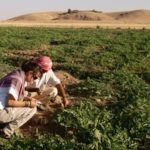
Caitlin Chaves Yates deposited Tell Mozan’s Outer City in the Third Millennium BCE in the group
Archaeology on Humanities Commons 6 years agoDuring the third millennium B.C.E., Tell Mozan, ancient Urkesh, expanded to include an extensive outer city. A variety of investigations in the outer city reveal a complex urban environment: a mix of planned and unplanned activity with the environment and large municipal works acting as constraining factors on more localized activity.
-
Erin Averett deposited “Playing the Part: Masks and Ritual Performance in Rural Sanctuaries in Iron Age Cyprus,” in The Physicality of the Other. Masks from the Ancient Near East and the Eastern Mediterranean, edited by A. Berlejung and J. Filitz. Orientalische Religionen in der Antike 27. RA. Tübingen: Mohr Siebeck. 305-37. in the group
 Classical archaeology on Humanities Commons 6 years ago
This volume comprises the conference proceedings of the international and interdisciplinary meeting held in Leipzig from November 9 to 11, 2015. Scholars from different research areas present masks from Egypt, Israel/Palestine, Syria, Mesopotamia, Phoenicia, Cyprus, and Greece, mainly from the third to the first millennium BCE. The masks are…[Read more]
-
Erin Averett deposited “Playing the Part: Masks and Ritual Performance in Rural Sanctuaries in Iron Age Cyprus,” in The Physicality of the Other. Masks from the Ancient Near East and the Eastern Mediterranean, edited by A. Berlejung and J. Filitz. Orientalische Religionen in der Antike 27. RA. Tübingen: Mohr Siebeck. 305-37. in the group
Archaeology on Humanities Commons 6 years agoThis volume comprises the conference proceedings of the international and interdisciplinary meeting held in Leipzig from November 9 to 11, 2015. Scholars from different research areas present masks from Egypt, Israel/Palestine, Syria, Mesopotamia, Phoenicia, Cyprus, and Greece, mainly from the third to the first millennium BCE. The masks are…[Read more]
-
Erin Averett deposited “Playing the Part: Masks and Ritual Performance in Rural Sanctuaries in Iron Age Cyprus,” in The Physicality of the Other. Masks from the Ancient Near East and the Eastern Mediterranean, edited by A. Berlejung and J. Filitz. Orientalische Religionen in der Antike 27. RA. Tübingen: Mohr Siebeck. 305-37. in the group
 Aegean and Eastern Mediterranean archaeology on Humanities Commons 6 years ago
This volume comprises the conference proceedings of the international and interdisciplinary meeting held in Leipzig from November 9 to 11, 2015. Scholars from different research areas present masks from Egypt, Israel/Palestine, Syria, Mesopotamia, Phoenicia, Cyprus, and Greece, mainly from the third to the first millennium BCE. The masks are…[Read more]
-

Dominik Hagmann deposited Grubenkochen. Eine experimentalarchäologische Untersuchung in the group
Archaeology on Humanities Commons 6 years agoThe paper describes an archaeological experiment which was conducted during the course “Experimental Archaeology” held at the Department of Prehistory and Historical Archeology at the University of Vienna from June 30th to July 2nd 2017. The aim of the experiment was to provide new insights on handling cooking pits which formed an integral part of…[Read more]
-

Franki Webb deposited Exploring contemporary archaeology with The Last of Us in the group
Archaeology on Humanities Commons 6 years agoThe Last of Us shows human society severely decimated by the Cordyceps infection, a fungal pathogen that attacks insects but manages to jump onto human hosts. Metaphorical in nature the infected represent “the dying remnants of a past society,” (Farca and Ladeveze 2016, p.8)
-
Justin Walsh deposited Contextualizing Greek Pottery at Hallstatt Sites in the group
Classical archaeology on Humanities Commons 6 years agoSeventeen years ago, Brian Shefton wrote, “the distribution pattern of the Greek imports for the Hallstatt period has crystallized a number of years ago and is unlikely to be greatly modified in the future except on point of detail” (Böhr and Shefton 2000, 28). Indeed, publications describing Greek pottery have reached similar conclusions: Gree…[Read more]
-
Justin Walsh deposited Contextualizing Greek Pottery at Hallstatt Sites in the group
Aegean and Eastern Mediterranean archaeology on Humanities Commons 6 years agoSeventeen years ago, Brian Shefton wrote, “the distribution pattern of the Greek imports for the Hallstatt period has crystallized a number of years ago and is unlikely to be greatly modified in the future except on point of detail” (Böhr and Shefton 2000, 28). Indeed, publications describing Greek pottery have reached similar conclusions: Gree…[Read more]
-
Henry Colburn deposited Gemelli Careri’s Description of Persepolis in the group
Classical archaeology on Humanities Commons 6 years agoThis article examines the description of Persepolis, one of the capital cities of the Achaemenid Persian Empire (ca. 550–330 BCE), by Giovanni Francesco Gemelli Careri (1651–1725) in his illustrated travelogue Giro del mondo (1699–1700). Gemelli Careri’s extensive description of the site—some twenty pages of text accompanied by two plates en…[Read more]
-
Henry Colburn deposited Gemelli Careri’s Description of Persepolis in the group
Archaeology on Humanities Commons 6 years agoThis article examines the description of Persepolis, one of the capital cities of the Achaemenid Persian Empire (ca. 550–330 BCE), by Giovanni Francesco Gemelli Careri (1651–1725) in his illustrated travelogue Giro del mondo (1699–1700). Gemelli Careri’s extensive description of the site—some twenty pages of text accompanied by two plates en…[Read more]
-

Tatjana P. Beuthe deposited Trends in the Location and Contents of Bronze-Containing Bronze Age Burials in Scotland in the group
Archaeology on Humanities Commons 6 years agoIdentifying trends is an important element of archaeology, but there is often a lack of regional and inter-regional analyses with regard to the available evidence. This paper attempts to shed light on one aspect of burial practice in Scotland by investigating geographical trends in Bronze Age burials that contain bronze artifacts.
-
Tatjana P. Beuthe deposited The Two Brothers: A Re-evaluation of Their Kinship in the group
Archaeology on Humanities Commons 6 years agoThe relationship between the ‘Two Brothers’ Nakhtankh and Khnumnakht has been heavily debated since the discovery of their mummies in 1907. Re-examining the coffin inscriptions of these two individuals reveals that Nakhtankh and Khnumnakht were likely uncle and nephew.
-
Tatjana P. Beuthe deposited On the validity of sexing data from early excavations: examples from Qau in the group
Archaeology on Humanities Commons 6 years agoA brief technical re-examination of a paper by George Mann on the Qau skeletons in the Duckworth collection is undertaken. Taking into account the original data and technical aspects of skeletal sexing, it is shown that old data on skeletal sexing may not always be as unreliable as previously thought. Factors that may introduce errors into this…[Read more]
-
William Caraher deposited The Ambivalent Landscape of Christian Corinth: The Archaeology of Place, Theology, and Politics in a Late Antique City in the group
Archaeology on Humanities Commons 6 years, 1 month agoThis chapter argues that the textual and archaeological evidence for imperial involvement in the Corinthia provides faint traces of what Jas Elsner has called “internal friction” in the manifestation of imperial and Corinthian authority in the region.
-
William Caraher deposited The Ambivalent Landscape of Christian Corinth: The Archaeology of Place, Theology, and Politics in a Late Antique City in the group
Aegean and Eastern Mediterranean archaeology on Humanities Commons 6 years, 1 month agoThis chapter argues that the textual and archaeological evidence for imperial involvement in the Corinthia provides faint traces of what Jas Elsner has called “internal friction” in the manifestation of imperial and Corinthian authority in the region.
-
William Caraher deposited Reflowing Legacy Data from Polis Chyrsochous on Cyprus in the group
Archaeology on Humanities Commons 6 years, 1 month agoA short paper on legacy data, flow, and time in archaeology based on my experiences at Polis on Cyprus.
-
William Caraher deposited Reflowing Legacy Data from Polis Chyrsochous on Cyprus in the group
Aegean and Eastern Mediterranean archaeology on Humanities Commons 6 years, 1 month agoA short paper on legacy data, flow, and time in archaeology based on my experiences at Polis on Cyprus.
-
Glen M Golub deposited Neanderthal for Sapiens in the group
Archaeology on Humanities Commons 6 years, 1 month agoThis commentary takes advantage of the provenance established by Hoffman, et al.2018 to explore exclusionary symbol sets in Art, Astrology, and Myth within La Pasiega Gallery C in Spain. Using the One Godz paradigm plus the added parameter of U-TH dating this commentary ascribes meaning to two proximate rock art panels, one homo sapien and the…[Read more]
- Load More
Open access, open source, open to all

