


-
Erin Averett deposited “Playing the Part: Masks and Ritual Performance in Rural Sanctuaries in Iron Age Cyprus,” in The Physicality of the Other. Masks from the Ancient Near East and the Eastern Mediterranean, edited by A. Berlejung and J. Filitz. Orientalische Religionen in der Antike 27. RA. Tübingen: Mohr Siebeck. 305-37. in the group
 Archaeology on Humanities Commons 6 years ago
This volume comprises the conference proceedings of the international and interdisciplinary meeting held in Leipzig from November 9 to 11, 2015. Scholars from different research areas present masks from Egypt, Israel/Palestine, Syria, Mesopotamia, Phoenicia, Cyprus, and Greece, mainly from the third to the first millennium BCE. The masks are…[Read more]
-

Dominik Hagmann deposited Grubenkochen. Eine experimentalarchäologische Untersuchung in the group
Archaeology on Humanities Commons 6 years agoThe paper describes an archaeological experiment which was conducted during the course “Experimental Archaeology” held at the Department of Prehistory and Historical Archeology at the University of Vienna from June 30th to July 2nd 2017. The aim of the experiment was to provide new insights on handling cooking pits which formed an integral part of…[Read more]
-

Franki Webb deposited Exploring contemporary archaeology with The Last of Us in the group
Archaeology on Humanities Commons 6 years agoThe Last of Us shows human society severely decimated by the Cordyceps infection, a fungal pathogen that attacks insects but manages to jump onto human hosts. Metaphorical in nature the infected represent “the dying remnants of a past society,” (Farca and Ladeveze 2016, p.8)
-

Edmund Hayes started the topic Conference Call for Papers: Historicizing the Shiʿi hadith Corpus in the discussion
 Material Sources for Early Islam and Late Antique Near East on Humanities Commons 6 years ago
Hosted by Leiden University Centre for Islam and Society (LUCIS) and Shiʿi Studies Unit, The Institute of Ismaili Studies, London (IIS)
Date: June 24-26 2020
Location: Leiden University, the Netherlands
Convenors: Hassan Ansari, Edmund Hayes, Gurdofarid Miskinzoda
Abstract deadline: January 31st 2020
This conference will focus on…[Read more]
-

Justin Walsh deposited Contextualizing Greek Pottery at Hallstatt Sites in the group
 Classical archaeology on Humanities Commons 6 years ago
Seventeen years ago, Brian Shefton wrote, “the distribution pattern of the Greek imports for the Hallstatt period has crystallized a number of years ago and is unlikely to be greatly modified in the future except on point of detail” (Böhr and Shefton 2000, 28). Indeed, publications describing Greek pottery have reached similar conclusions: Gree…[Read more]
-
Henry Colburn deposited Gemelli Careri’s Description of Persepolis in the group
Classical archaeology on Humanities Commons 6 years agoThis article examines the description of Persepolis, one of the capital cities of the Achaemenid Persian Empire (ca. 550–330 BCE), by Giovanni Francesco Gemelli Careri (1651–1725) in his illustrated travelogue Giro del mondo (1699–1700). Gemelli Careri’s extensive description of the site—some twenty pages of text accompanied by two plates en…[Read more]
-
Henry Colburn deposited Gemelli Careri’s Description of Persepolis in the group
Archaeology on Humanities Commons 6 years agoThis article examines the description of Persepolis, one of the capital cities of the Achaemenid Persian Empire (ca. 550–330 BCE), by Giovanni Francesco Gemelli Careri (1651–1725) in his illustrated travelogue Giro del mondo (1699–1700). Gemelli Careri’s extensive description of the site—some twenty pages of text accompanied by two plates en…[Read more]
-

Tatjana P. Beuthe deposited Trends in the Location and Contents of Bronze-Containing Bronze Age Burials in Scotland in the group
Archaeology on Humanities Commons 6 years agoIdentifying trends is an important element of archaeology, but there is often a lack of regional and inter-regional analyses with regard to the available evidence. This paper attempts to shed light on one aspect of burial practice in Scotland by investigating geographical trends in Bronze Age burials that contain bronze artifacts.
-
Tatjana P. Beuthe deposited The Two Brothers: A Re-evaluation of Their Kinship in the group
Archaeology on Humanities Commons 6 years, 1 month agoThe relationship between the ‘Two Brothers’ Nakhtankh and Khnumnakht has been heavily debated since the discovery of their mummies in 1907. Re-examining the coffin inscriptions of these two individuals reveals that Nakhtankh and Khnumnakht were likely uncle and nephew.
-
Tatjana P. Beuthe deposited On the validity of sexing data from early excavations: examples from Qau in the group
Archaeology on Humanities Commons 6 years, 1 month agoA brief technical re-examination of a paper by George Mann on the Qau skeletons in the Duckworth collection is undertaken. Taking into account the original data and technical aspects of skeletal sexing, it is shown that old data on skeletal sexing may not always be as unreliable as previously thought. Factors that may introduce errors into this…[Read more]
-

Matthew Firth deposited The Broken Body in Eleventh to Thirteenth-Century Anglo-Scandinavian Literature in the group
 Medieval Studies on Humanities Commons 6 years, 1 month ago
Anglo-Scandinavian literary and legal texts give evidence of two cultures which shared similar attitudes to punitive acts of violence; whether as literary trope or legislative recourse, deliberate mutilation was a familiar form of retribution. Why this is the case is not always clear within the context of the texts in which such episodes are…[Read more]
-
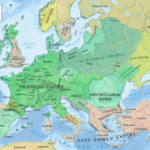
Matthew Firth deposited The Broken Body in Eleventh to Thirteenth-Century Anglo-Scandinavian Literature in the group
 Early Medieval on Humanities Commons 6 years, 1 month ago
Anglo-Scandinavian literary and legal texts give evidence of two cultures which shared similar attitudes to punitive acts of violence; whether as literary trope or legislative recourse, deliberate mutilation was a familiar form of retribution. Why this is the case is not always clear within the context of the texts in which such episodes are…[Read more]
-
Matthew Firth deposited The Politics of Hegemony and the ‘Empires’ of Anglo-Saxon England in the group
Medieval Studies on Humanities Commons 6 years, 1 month agoThe term ’empire’ is frequently applied retrospectively by historians to historical trans-cultural political entities that are notable either for their geographic breadth, unprecedented expansionary ambitions, or extensive political hegemony. Yet the use of the terminology of empire in historical studies is often ill-defined, as exemplified by the…[Read more]
-
Matthew Firth deposited The Politics of Hegemony and the ‘Empires’ of Anglo-Saxon England in the group
Early Medieval on Humanities Commons 6 years, 1 month agoThe term ’empire’ is frequently applied retrospectively by historians to historical trans-cultural political entities that are notable either for their geographic breadth, unprecedented expansionary ambitions, or extensive political hegemony. Yet the use of the terminology of empire in historical studies is often ill-defined, as exemplified by the…[Read more]
-
Matthew Firth deposited Constructing a King: William of Malmesbury and the Life of Æthelstan in the group
Medieval Studies on Humanities Commons 6 years, 1 month agoGesta regum Anglorum, written by William of Malmesbury in the twelfth century, is a key source for the life of the tenth-century Anglo-Saxon king, Æthelstan (924–939). Contemporary narrative histories provide little detail relating to Æthelstan’s kingship, and the account of Gesta regum Anglorum purports to grant an unparalleled insight into his l…[Read more]
-
Matthew Firth deposited Constructing a King: William of Malmesbury and the Life of Æthelstan in the group
Early Medieval on Humanities Commons 6 years, 1 month agoGesta regum Anglorum, written by William of Malmesbury in the twelfth century, is a key source for the life of the tenth-century Anglo-Saxon king, Æthelstan (924–939). Contemporary narrative histories provide little detail relating to Æthelstan’s kingship, and the account of Gesta regum Anglorum purports to grant an unparalleled insight into his l…[Read more]
-
Matthew Firth deposited Allegories of Sight: Blinding and Power in Late Anglo-Saxon England in the group
Medieval Studies on Humanities Commons 6 years, 1 month agoThe practical necessity of sight to effective participation in Anglo-Saxon life is reflected in the multifaceted depictions of punitive blinding in late Anglo-Saxon literature. As a motif of empowerment or disempowerment, acts of blinding permeate the histories and hagiographies of the eleventh and twelfth centuries and each narrative mode…[Read more]
-
Matthew Firth deposited Allegories of Sight: Blinding and Power in Late Anglo-Saxon England in the group
Early Medieval on Humanities Commons 6 years, 1 month agoThe practical necessity of sight to effective participation in Anglo-Saxon life is reflected in the multifaceted depictions of punitive blinding in late Anglo-Saxon literature. As a motif of empowerment or disempowerment, acts of blinding permeate the histories and hagiographies of the eleventh and twelfth centuries and each narrative mode…[Read more]
-
Matthew Firth deposited London Under Danish Rule: Cnut’s Politics and Policies as a Demonstration of Power in the group
Medieval Studies on Humanities Commons 6 years, 1 month agoIn 1016 the young Danish prince who was to become Cnut the Great, King of England, Denmark, and Norway, laid siege to the city of London as part of a program of conquest that would see him crowned as King of England by 1017. This millennial year is an appropriate time to reflect on the consequences of London’s defiance as a city that was rapidly…[Read more]
-
Matthew Firth deposited London Under Danish Rule: Cnut’s Politics and Policies as a Demonstration of Power in the group
Early Medieval on Humanities Commons 6 years, 1 month agoIn 1016 the young Danish prince who was to become Cnut the Great, King of England, Denmark, and Norway, laid siege to the city of London as part of a program of conquest that would see him crowned as King of England by 1017. This millennial year is an appropriate time to reflect on the consequences of London’s defiance as a city that was rapidly…[Read more]
- Load More
Open access, open source, open to all
