


-

Chris A. Kramer deposited World-Traveling, Double Consciousness, and Laughter in the group
 Analytic Philosophy on Humanities Commons 4 years, 7 months ago
In this paper I borrow from Maria Lugones’ work on playful ” world-traveling ” and W.E.B. Du Bois’ notion of ” double consciousness ” to make the case that humor can facilitate an openness and cooperative attitude among an otherwise closed, even adversarial audience. I focus on what I call ” subversive ” humor, that which is employed by or on…[Read more]
-
Chris A. Kramer deposited Moral Imaginative Resistance to Heaven: Why the Problem of Evil is so Intractable in the group
Analytic Philosophy on Humanities Commons 4 years, 7 months agoThe majority of philosophers of religion, at least since Plantinga’s reply to Mackie’s logical problem of evil, agree that it is logically possible for an omnibenevolent, omniscient, and omnipotent God to exist who permits some of the evils we see in the actual world. This is conceivable essentially because of the possible world known as heaven.…[Read more]
-

Elisabeth Moreau deposited Vegetal Analogy in Early Modern Medicine: Generation as Plant Cutting in Sennert’s Early Treatises (1611–1619) in the group
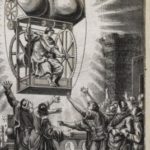 Science Studies and the History of Science on Humanities Commons 4 years, 7 months ago
This chapter examines the use of vegetal analogy in late Renaissance physiology through the case of the German physician Daniel Sennert (1572–1637). It is centered on Sennert’s explanation of generation, in particular the transmission of life through the vegetative soul within the seed, as developed in his early works on medicine and alchemy, the…[Read more]
-

Paul Michael Kurtz deposited The Philological Apparatus: Science, Text, and Nation in the Nineteenth Century in the group
Science Studies and the History of Science on Humanities Commons 4 years, 7 months agoPhilology haunts the humanities, through both its defendants and its detractors. This article examines the construction of philology as the premier science of the long nineteenth century in Europe. It aims to bring the history of philology up to date by taking it seriously as a science and giving it the kind of treatment that has dominated the…[Read more]
-

Masahiro Morioka deposited Manga Introduction to Philosophy: An Exploration of Time, Existence, the Self, and the Meaning of Life in the group
Analytic Philosophy on Humanities Commons 4 years, 7 months agoThis is perhaps the world’s first book in which a philosopher himself illustrates his own philosophical investigation into hard problems on time, being, solipsism, and life, in the form of “Manga.” This book was originally published in Japanese in 2013 and translated into English by Robert Chapeskie in 2021.
-

Rodrigo Fernos deposited Medicine and International Relations in the Caribbean: Some Historical Variants in the group
Science Studies and the History of Science on Humanities Commons 4 years, 8 months agoMedicine has long framed race relations in the Caribbean-that basin where African and European cultures have met from the beginning of the Colonial Period to the twentieth century. Whether Sir Hans Sloane, founder of the British Museum and President of the Royal Society of London, who as a physician wrote about African medical beliefs and…[Read more]
-
Rodrigo Fernos deposited Gonzalo Fernós Maldonado y El Espacio para la Ciencia en Puerto Rico in the group
Science Studies and the History of Science on Humanities Commons 4 years, 8 months agoGonzalo Fernós Maldonado (1887-1966) fue uno de los arquitectos más destacados en Puerto Rico durante las primeras dïcadas del siglo XX, cuyos logros y habilidades lamentablemente han quedado en el olvido colectivo. Este libro, escrito por su nieto, trata de resucitar la historia de su vida en un momento histórico muy diferente al con…[Read more]
-
Rodrigo Fernos deposited Science Still Born: The Rise and Impact of the Pan American Scientific Congresses, 1898-1916 in the group
Science Studies and the History of Science on Humanities Commons 4 years, 8 months agoThe Pan-American Scientific Congresses ushered a new scientific era in Latin America. Bringing together scientists, engineers, and medical researchers from both South and North America, they facilitated the exchange of ideas between the two regions at the beginning of the twentieth century. Nobel Prize thinkers such as Albert Michelson and others,…[Read more]
-
Rodrigo Fernos deposited Science and Sovereignty: Western Ideas about Science and Nation and their Expression in Puerto Rico and the Caribbean in the group
Science Studies and the History of Science on Humanities Commons 4 years, 8 months agoScience and democracy are two of the most cherished values of Western Civilization, so much so that they are often associated with each other. With science, it is held, comes democracy. But, will democracy necessarily blossom with the seed of science? Inversely, does the collapse of the Arecibo Observatory on December 1, 2020 represent a predictor…[Read more]
-
Rodrigo Fernos deposited From Galileo to Boltzmann: A History of the Fragility and Resilience of Science in the group
Science Studies and the History of Science on Humanities Commons 4 years, 8 months agoWhen the same $9 billion allocated to a nation’s annual budget (Puerto Rico 2015) is spent on a single scientific instrument (Hubble telescope) or to administer a single scientific facility for a year (CERN), we might presume that science is today a monolithic enterprise, akin to what the pyramids of Ancient Egypt had been in their day. Yet when…[Read more]
-
Rodrigo Fernos deposited Amistad y Progreso: Los Congresos Científicos Pan-Americanos, 1898-1916 in the group
Science Studies and the History of Science on Humanities Commons 4 years, 8 months agoLos Congresos Científicos Pan-Americanos abrieron una nueva época de intercambio científico no solamente dentro de los pa?ses de América Latina sino entre estos y los Estados Unidos. Figuras importantes como Albert. A. Michelson, ganador del Premio Nobel en 1907, regularmente atendieron estas conferencias, así ayudando a difundir los últimos avanc…[Read more]
-
Rodrigo Fernos deposited Biology and Ethics in the group
Science Studies and the History of Science on Humanities Commons 4 years, 8 months agoBiology and Ethics provides a historian’s perspective of the attempts to ground an ethics within a biological framework. Aside from its analysis of schools as social Darwinism, eugenics, and sociobiology, it attempts to evaluate their veracity using cases as Japan’s Unit 731, the Guatemala Syphilis study, and others. In spite of the much disputed…[Read more]
-
Lodewijk Muns deposited Fiction, Truth, and Lies: The Nonassertion Theory, Quotation, and Music as Fiction in the group
Analytic Philosophy on Humanities Commons 4 years, 8 months agoThe Nonassertion Theory of Fiction implies that fictional discourse is quoted discourse. It can stand up against the critique in Walton’s Mimesis as Make-Believe, and avoids the undesirable consequences of that theory. The possibility of hearing music as discursive justifies thinking of (some) music as fiction, against Walton’s reservations.
-
Maciej Junkiert deposited Nowi Grecy. Historyzm polskich romantyków wobec narodzin Altertumswissenschaft in the group
Science Studies and the History of Science on Humanities Commons 4 years, 9 months agoThe purpose of this book is to analyse the role which the development of the German Altertumswissenschaft at the turn of the 18th and 19th centuries had (in combination with the English-French intellectual base) on the birth of the Romantic reception of the ancient traditions in Poland.
-

Dominik Hünniger deposited The “Normative Forces” of Difference: Ecology, Economy and Society during Cattle Plagues in the Eighteenth Century in the group
Science Studies and the History of Science on Humanities Commons 4 years, 10 months agoOne of the recurring themes in the public perception of containment policies during the current COVID-19 pandemic are the supposedly uneven and everchanging measures taken up by international, national and local authorities. This is especially the case in countries with a federal structure, like Germany. Not surprisingly, historical containment…[Read more]
-
Dominik Hünniger deposited Bilder machen – Charaktere, Stereotype und die Konstruktion menschlicher Varietät bei Johann Friedrich Blumenbach in the group
Science Studies and the History of Science on Humanities Commons 4 years, 11 months agoThis chapter analyses the image production practices of the Goettingen university anatomist and natural historian Johann Friedrich Blumenbach (1752–1840) and the Berlin artis Daniel Chodowiecki (1726-1801) when they collaborated on Blumenbach’s Beyträge zur Naturgeschichte (1790). Blumenbach wanted Chodowiecki to produce family scences for each of…[Read more]
-

Evina Steinova deposited The Oldest Manuscript Tradition of the Etymologiae (eighty years after A. E. Anspach) in the group
Science Studies and the History of Science on Humanities Commons 5 years, 1 month agoThe Etymologiae of Isidore of Seville was one of the most widely read works of the early Middle Ages, as is evidenced by the number of surviving manuscripts. August Eduard Anspach’s handlist from the 1940s puts their number at almost 1,200, of which approximately 300 were estimated to have been copied before the year 1000. This article, based on a…[Read more]
-

Mateus Yuri Passos deposited The Chudnovsky Case: How Literary Journalism Can Open the “Black Box” of Science in the group
Science Studies and the History of Science on Humanities Commons 5 years, 1 month agoLiterary journalism offers an important way for explaining the complexity of the scientific world to a lay audience. An analysis of two of Richard Preston’s pieces published by The New Yorker, “The Mountains of Pi” and “Capturing the Unicorn” and how they give emphasize science-in-the-making.
-

Francesco Luzzini deposited Sounding the depths of providence: Mineral (re)generation and human-environment interaction in the early modern period in the group
Science Studies and the History of Science on Humanities Commons 5 years, 2 months agoThe genesis and growth of minerals, as well as the existence in ore veins of such organic features as ‘seeds’, ‘matrices’, and ‘nourishment’, remained central and recurrent issues for natural philosophers, technicians, alchemists and practitioners throughout early modern Europe. By providing an overview of the main themes, voices, and concurrent…[Read more]
-
Elisabeth Moreau deposited Libavius, Andreas in the group
Science Studies and the History of Science on Humanities Commons 5 years, 3 months agoIn the history of early modern science, the German physician Andreas Libavius (Halle, Saxony, c.1550–Coburg, Bavaria, 1616) is known for having promoted the institutionalization of alchemy in the academic sphere along with the creation of laboratories and instruments. Libavius was also remarkable for his extended network of scholarly friends and f…[Read more]
- Load More
Open access, open source, open to all