


-

Alexa Alice Joubin deposited “Open and Intersectional Pedagogy: Teaching the Early Modern with Generative Artificial Intelligence,” MLA, Philadelphia, January 6, 2024 in the group
 The Renaissance Society of America on Humanities Commons 1 year, 11 months ago
What a piece of theatre work is AI. Since AI outputs can be seen as a theatrical performance, in her 10-minute paper at the MLA, Alexa Alice Joubin argued that we can teach critical questioning skills using generative AI. She demonstrated responsible and creative ways to teach students meta-cognition, using Shakespeare and early modern studies as…[Read more]
-
Alexa Alice Joubin deposited “Open and Intersectional Pedagogy: Teaching the Early Modern with Generative Artificial Intelligence,” MLA convention, Philadelphia, January 6, 2024 in the group
The Renaissance Society of America on Humanities Commons 1 year, 11 months agoWhat a piece of theatre work is AI Since AI outputs can be seen as a theatrical performance, in her 10-minute paper at the MLA, Alexa Alice Joubin argued that we can teach critical questioning skills using generative AI. She demonstrated responsible and creative ways to teach students meta-cognition, using Shakespeare and early modern studies as…[Read more]
-

Oscar Perea-Rodriguez deposited El «Libro de los pensamientos variables» como ejemplo de utopía y disidencia en el siglo XV in the group
 Medieval Studies on Humanities Commons 1 year, 11 months ago
El artículo analiza una curiosa obra titulada «Libro de los pensamientos variables», mezcla de prosa y verso y compuesta entre 1488 y 1492, que se conserva en un solo manuscrito de la Biblioteca Nacional de España (MSS/6442). Tras resumirse su contenido y sus principales inf luencias literarias, se intenta identificar a su posible autor como el…[Read more]
-
Oscar Perea-Rodriguez deposited El «Libro de los pensamientos variables» como ejemplo de utopía y disidencia en el siglo XV in the group
 Late Medieval History on Humanities Commons 1 year, 11 months ago
El artículo analiza una curiosa obra titulada «Libro de los pensamientos variables», mezcla de prosa y verso y compuesta entre 1488 y 1492, que se conserva en un solo manuscrito de la Biblioteca Nacional de España (MSS/6442). Tras resumirse su contenido y sus principales inf luencias literarias, se intenta identificar a su posible autor como el…[Read more]
-
Alexa Alice Joubin deposited Review of #SuchStuff Podcast by the London Globe, Early Modern Digital Review 6.2 (2023): 149-153 in the group
The Renaissance Society of America on Humanities Commons 1 year, 12 months agoEducational podcasts have gained momentum in recent years. Closure of live performance venues and widespread lockdowns as part of public hygiene measures during the global COVID-19 pandemic further increased interest in at-home consumption of digitally delivered content for entertainment and education. Supported by the Globe Theatre’s education d…[Read more]
-

Eduardo Paredes Ocampo deposited Superhero Segismundo: Uncovering the Politics of Angry Gestures in the 2018 Graphic Novel Adaptation of La vida es sueño in the group
 Renaissance / Early Modern Studies on Humanities Commons 1 year, 12 months ago
The comic adaptation of La vida es sueño by Calderón de la Barca (2018) emphasizes the emotion of anger as one of the forces that guides the plot. The protagonist, Segismundo, displays aggression through two main gestures: the clenching fist and the frown on his face. This article aims to answer the following questions: Why did the comic artist d…[Read more]
-
Oscar Perea-Rodriguez deposited Auge y caída de ‘lo’ judeoconverso en La Celestina: un debate en decadencia in the group
Medieval Studies on Humanities Commons 2 years agoMis conversaciones con Joseph T. Snow, nuestro querido Pepe Nieves, como él mismo nos insta a llamarlo desde el contacto inicial, generalmente tienen lugar en la cafetería de la Biblioteca Nacional de Madrid, un insólito locus amoenus en el cual el más habitual inquilino del pupitre 99 de la Sala María Moliner ejerce con bondad y simpatía su papel…[Read more]
-
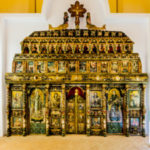
Ana Dumitran deposited Icoana Sfântului Ioan Botezătorul cu scene din viață de la Budești‑Josani in the group
Medieval Studies on Humanities Commons 2 years agoIn the history of old Romanian painting, the icon of Saint John the Baptist with scenes from his life from Budești‑Josani occupies a very important place due to its exceptional artistic quality, as well as the Slavonic inscription with the master’s signature and date. The inscription, in a very poor state of preservation, has already been part…[Read more]
-
Ana Dumitran deposited The Chronology of the Murals in the Râmeț Monastic Church (Alba County, Romania) Based on a Reevaluation of the Dating of the Narthex Inscription in the group
Medieval Studies on Humanities Commons 2 years agoLa découverte d’une inscription slavonne dans le narthex de l’église du monastère de Râmeț (comté d’Alba) en 1966, sa relecture avec des moyens techniques spéciaux en 1978 et sa publication officielle en 1985 ont porté à l’attention des historiens le nom du peintre (Mihul du Criș-Blanc), le nom de l’évêque fondateur (archevêque Gélase),…[Read more]
-

Tiago Queimada e Silva deposited Lectio praecursoria: The Good Noblemen Who Conquered the Kingdom: Islam, Historiography, and Aristocratic Legitimation in Late-Medieval Portugal in the group
Medieval Studies on Humanities Commons 2 years agoThis text consists of the ‘lectio praecursoria’ given at the defense of my doctoral dissertation “The Good Noblemen Who Conquered the Kingdom: Islam, Historiography, and Aristocratic Legitimation in Late-Medieval Portugal”. This dissertation deals with aristocratic historiography and political legitimation in late-medieval Portugal (late…[Read more]
-
Tiago Queimada e Silva deposited Lectio praecursoria: The Good Noblemen Who Conquered the Kingdom: Islam, Historiography, and Aristocratic Legitimation in Late-Medieval Portugal in the group
Late Medieval History on Humanities Commons 2 years agoThis text consists of the ‘lectio praecursoria’ given at the defense of my doctoral dissertation “The Good Noblemen Who Conquered the Kingdom: Islam, Historiography, and Aristocratic Legitimation in Late-Medieval Portugal”. This dissertation deals with aristocratic historiography and political legitimation in late-medieval Portugal (late…[Read more]
-

Lloyd Graham deposited Eyes wide open: A recurring ocular motif in and beyond Syracuse, Sicily in the group
 Italian Art Society on Humanities Commons 2 years, 1 month ago
Sicily – and especially Syracuse – seems to have had an ongoing preoccupation with paired eyes as an apotropaic or magico-religious symbol. This brief paper explores some signature pieces and speculates that the excised eyes of Santa Lucia, patron saint of Syracuse, may be but a recent embodiment of a propensity that dates back to the Neolithic era.
-
Alexa Alice Joubin deposited “Radical Listening and the Global Politics of Inclusiveness,” Inclusive Shakespeares: Identity, Pedagogy, Performance, ed. Sonya Freeman Loftis, Mardy Philippian, Justin P. Shaw (Palgrave, 2023), pp. 221-234 in the group
The Renaissance Society of America on Humanities Commons 2 years, 1 month agoInclusiveness in higher education is distinct from advocacy journalism, which means we have to work actively against any ineffectual default to rituals of inclusion. When implemented unilaterally as a one-size-fits-all social imposition, some gestures of inclusion risk becoming empty rituals. As multifocal, multilingual, and multicultural…[Read more]
-

Elisabeth Moreau deposited Temperament and the Senses: The Taste, Odor and Color of Drugs in Late-Renaissance Galenism in the group
 Renaissance Science and Medicine on Humanities Commons 2 years, 1 month ago
According to the medical tradition, the temperament of bodies came from the balance of their primary qualities – hot, cold, dry, and moist. However, physicians associated additional sensory properties with temperament in the field of pharmacology. These sensations included taste, color, and odor, which allow an appraisal of the constitution and a…[Read more]
-
Elisabeth Moreau deposited Temperament and the Senses: The Taste, Odor and Color of Drugs in Late-Renaissance Galenism in the group
Renaissance / Early Modern Studies on Humanities Commons 2 years, 1 month agoAccording to the medical tradition, the temperament of bodies came from the balance of their primary qualities – hot, cold, dry, and moist. However, physicians associated additional sensory properties with temperament in the field of pharmacology. These sensations included taste, color, and odor, which allow an appraisal of the constitution and a…[Read more]
- Load More
Open access, open source, open to all