


Asa Simon Mittman
,@asmittman
0
Following
9
Followers
-

Pramod Ranjan deposited COVID-19, science and responsibility of the intellectuals in the group
 Medical Humanities on Humanities Commons 3 years, 2 months ago
The coronavirus-induced lockdown hasn’t just eroded our physical liberty; it has also eroded our intellectual freedom. Our freedom to think has been put under lock and key. Clearly, we are on the threshold of a dangerous phase. Which way we go from here will depend on how soon and how well we gauge the danger and start exploring the ways to c…[Read more]
-
Pramod Ranjan deposited Der Offenbarungseid in the group
 Public Humanities on Humanities Commons 3 years, 2 months ago
Wissenschaftler und Denker haben sich widerstandslos für die Durchsetzung der herrschenden Corona-Agenda einspannen lassen.
Der durch das Coronavirus veranlasste Lockdown hat nicht nur unsere körperliche Freiheit ausgehöhlt, sondern auch unsere geistige Freiheit untergraben. In vielen Ländern wurde für das Denken Käfighaltung angeordnet. Offen…[Read more]
-
Pramod Ranjan deposited Das große Sterben in the group
Public Humanities on Humanities Commons 3 years, 2 months ago“Corona-Tote“ — man denkt dabei nur an Menschen, die in der Folge einer Virusinfektion verstorben sind. Dabei zeichnet sich schon jetzt ab, dass die Todeszahlen infolge der unter Verweis auf Corona ergriffenen „Maßnahmen“ weltweit um ein Vielfaches höher sein werden. Je mehr Zeit vergeht, umso größer dürfte diese Differenz ausfallen. Weil aber ni…[Read more]
-
Pramod Ranjan deposited Turning a deaf ear to the footsteps of death, famine and economic disparity (A comment on India’s Budget 2021) in the group
Public Humanities on Humanities Commons 3 years, 2 months agoLike in most parts of the world, life was on a stand-still in India for the past almost one year, courtesy of the Covid-19 pandemic. Now, the poor and the middle class are in a miserable state. Crores have lost their jobs and lakhs have faced savage reductions in their income. Amid this crisis, the Government of India presented its annual budget…[Read more]
-
Pramod Ranjan deposited महामारी के दौर में डॉक्टरों की भूमिका, सीमाएं और प्रोटोकॉल के कुछ सवाल in the group
Medical Humanities on Humanities Commons 3 years, 2 months agoअधिकांश लोग समझते हैं कि चिकित्सक ही जांच द्वारा तय करते हैं कि किसे कोविड है और किसे नहीं तथा अगर किसी की मौत होती है तो चिकित्सक ही यह तय करते हैं कि वह मृत्यु कोविड से हुई है या किसी अन्य कारण से। इसलिए जब कोई खुद को चिकित्सक बताता है या अपने परिवार में चिकित्सकों के होने का ज़िक्र करता है तो लोग उसकी बात पर अनिवार्य रूप से विश्वास करते ह…[Read more]
-
Pramod Ranjan deposited Covid-19: Role and limitations of doctors and treatment protocols in the group
Medical Humanities on Humanities Commons 3 years, 2 months agoAs was expected, the country is witnessing an explosion of Covid cases, leading to chaos and mayhem. People are dying for want of oxygen. The protocol for the treatment of Covid patients is faulty and that is one reason for the high number of deaths. Thanks to the protocol, deaths due to other causes are also being added to the Covid toll. In this…[Read more]
-

Elisabeth Moreau deposited Combining Atomism with Galenic Medicine: The Physiological Theory of Isaac Beeckman (1616-1627) in the group
Medical Humanities on Humanities Commons 3 years, 2 months agoAlthough he obtained a medical degree at the University of Caen in 1618, Isaac Beeckman never practised medicine. Instead, he developed an atomistic conception of Galenic physiology by discussing, throughout his notebook, the constituents and functioning of the living body. Interestingly, Beeckman applied his atomistic interpretation to the notion…[Read more]
-
Maurizio Brancaleoni deposited Thomas Wolfe – Un estratto da ‘Passage to England: A Selection’ (Traduzione di Maurizio Brancaleoni) in the group
Public Humanities on Humanities Commons 3 years, 2 months agoThomas Wolfe (1900-1938) nasce ad Asheville, North Carolina. Mentre studia drammaturgia ad Harvard scrive per il teatro, ma il successo arriva con il romanzo autobiografico ‘Look Homeward, Angel’ (1929), seguito da ‘Of Time and the River’ (1935) e dai postumi ‘The Web and the Rock’ (1939) e ‘You Can’t Go Home Again’ (1940). ‘Passage to England: A…[Read more]
-

Samuel Adu-Gyamfi deposited COVID-19 In Africa: An Economic and Social Interpretation (2019-2022) in the group
Public Humanities on Humanities Commons 3 years, 2 months agoThe COVID-19 pandemic has caused a lot of challenges to the globalized world. Globally, it has decimated over six million lives. Since 2019, it has shook the world in many respects, especially, it disrupted economies and societies and halted the majority of human endeavor. Commentaries and reports from the World Health Organization (WHO) and the…[Read more]
-

Egas Moniz Bandeira deposited Creating a Constitutional Absolute Monarchy: Li Jiaju, Dashou, and Late Qing Interpretations of the Japanese Parliament in the group
 Global & Transnational Studies on Humanities Commons 3 years, 2 months ago
This paper explores interpretations of the Japanese parliament by governmental actors in the Qing empire, most importantly the commissioners for constitutional research Li Jiaju 李家駒 (1871–1938) and Dashou 達壽 (1870–1939). It shows that, within a theoretical framework formed in dialogue with their Japanese constitutionalist colleagues, these actors…[Read more]
-

Anja Ute Blode deposited Spotlight on the Periphery – the Marginalia in Codex AM 899 4to in the group
 Medieval Studies on Humanities Commons 3 years, 2 months ago
This contribution examines an early modern manuscript, AM 899 4to, from Sweden, which features the Stora Rimkrönikan (Erikskrönikan, Karlskrönikan og Sturekrönikan) from the Swedish Middle Ages. AM 899 4to is extensively annotated. It shows that the medieval texts were read and received in modern times. The various annotations are here for the fir…[Read more]
-

Christian Cooijmans deposited Annales Fontanellenses in the group
 Early Medieval on Humanities Commons 3 years, 2 months ago
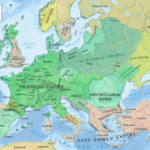
The ninth-century Annales Fontanellenses are a concise set of monastic annals composed by the community of St Wandrille, situated along the lower reaches of the river Seine. Covering the 840s and 850s, their contents are concerned with a relatively brief but highly tumultuous period in the history of the Frankish realm, representing an eclectic…[Read more]
-

Paul Michael Kurtz deposited A Historical, Critical Retrospective on Historical Criticism in the group
 Biblical Studies on Humanities Commons 3 years, 2 months ago
This chapter examines how historical and critical modalities of reading sacred scripture became central to modern biblical studies. It examines what “criticism” was, whence it came, what it did, and which critiques it sustained, before considering its prospects for future historical and literary analysis of the Bible.
-

Meredith Warren deposited Who is “Worthy of Honour”? Women as Elders in Late Second Temple Period Literature in the group
Biblical Studies on Humanities Commons 3 years, 3 months agoGroups and individuals known as “elders” (Greek: presbyteros, gerousia; Hebrew: zaqan) are often found in ancient Jewish texts and inscriptions. Their ubiquity in such texts and inscriptions is accompanied by very little information about their actual function. Generally, this may be because we have some kind of impression that a group of old…[Read more]
-
Meredith Warren deposited The Mother of Rufus and Paul in Romans 16 in the group
Biblical Studies on Humanities Commons 3 years, 3 months agoRufus’s mother features in Paul’s concluding list of church leaders such as Phoebe in Romans 16. Paul calls her his own mother. I argue that Rufus’s mother’s inclusion indicates higher status and influence within the Pauline house-churches, building on Elmer’s notion of corporate Pauline authorship.
-
Meredith Warren deposited Muted and Hidden Monsters in Revelation 12 in the group
Biblical Studies on Humanities Commons 3 years, 3 months agoThe Woman clothed with the Sun makes a brief appearance in Revelation 12; however, her influence upon the imaginations of artists and interpreters is substantive. She is unnamed and yet multiple identities are ascribed to her including individual women (Eve, Mary), corporate institutions (Israel, the church), and ancient goddesses. In this…[Read more]
-
Meredith Warren deposited Moses Married a Black Woman: Modern American Receptions of the Cushite Wife of Moses in the group
Biblical Studies on Humanities Commons 3 years, 3 months agoAmericans overwhelmingly assume that Moses married a Black woman. Using sources from the nineteenth and twentieth centuries, this article highlights interpretations of Moses’s marriage to the Cushite woman in Numbers 12. Utilising cultural-critical reception history—that biblical interpretation is culturally conditioned—readers in the United State…[Read more]
-
Meredith Warren deposited Forgetting the Forgetter: The Cupbearer in the Joseph Saga (Genesis 40–41) in the group
Biblical Studies on Humanities Commons 3 years, 3 months agoTypically, the cupbearer in Genesis 40–41 is interpreted only as a member of Joseph’s supporting cast. However, closely reading this minor character suggests more options for interpreting both him and other anonymous courtiers found throughout the Hebrew Bible. The cupbearer’s actions (and inactions) raise ethical and psychological questions about…[Read more]
-
Meredith Warren deposited The Social Dynamics Surrounding Yahwistic Women’s Supposed Ritual Deviance in Ezekiel 13:17–23 in the group
Biblical Studies on Humanities Commons 3 years, 3 months agoThis article suggests that in Ezekiel 13:17–23 we have an example of the ritual activities of Yahwistic women being undermined. However, rather than opening the hermeneutical crux of attempting to understand what it is the women are doing or how their ritual activity is functioning, I will focus squarely on the broader social dynamics in the t…[Read more]
-
Meredith Warren deposited “Call Me By Your Name”: Critical Fabulation and the Woman of Judges 19 in the group
Biblical Studies on Humanities Commons 3 years, 3 months agoIs anonymity a form of violence? The woman of Judges 19 endured gang-rape and dismemberment, and neither the Bible nor its ancient exegetes gave her a name. This article surveys the modern writers and scholars who chose new names for her, examining how their choices of names reflected their broader goals for retelling her story. From there, I turn…[Read more]
- Load More
