


Alexandre Roberts
,@amroberts
56
Following
25
Followers
-
A new museum has opened in Tbilisi at the Writer’s House of Georgia: The Museum of Repressed Writers. The museum honours the executed poets from Georgia’s Soviet past, poets whose identities Soviet authorities tried to destroy. This article examines the story the museum tells about Soviet literary and political history.
-
Rebecca Ruth Gould deposited Translating Line Breaks: A View from Persian Poetics on Humanities Commons 2 years, 4 months ago
Line breaks are arguably the defining feature of poetry, in the absence of which a text becomes prose. Consequently, the translation of line breaks is a decisive issue for every poetry translator. Classical and modern literary theorists have argued that the potential for enjambment, which we understand as the effect that makes line breaks possible…[Read more]
-

Francesco Luzzini deposited Harvesting Underground: (re)generative theories and vegetal analogies in the early modern debate on mineral ores (I) in the group
 Science Studies and the History of Science on Humanities Commons 2 years, 4 months ago
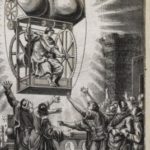
The early modern use of vegetal terms to explain the origin and growth of ores was widespread in mining industry, alchemy, and natural philosophy. In the writings of authors from many different backgrounds, mineral veins were often described as ‘trees’ which moved upwards, bore fruits, and underwent a life cycle. Accordingly, the existence in ore…[Read more]
-
Francesco Luzzini deposited Harvesting Underground: (re)generative theories and vegetal analogies in the early modern debate on mineral ores (I) in the group
 GeoHumanities on Humanities Commons 2 years, 4 months ago
The early modern use of vegetal terms to explain the origin and growth of ores was widespread in mining industry, alchemy, and natural philosophy. In the writings of authors from many different backgrounds, mineral veins were often described as ‘trees’ which moved upwards, bore fruits, and underwent a life cycle. Accordingly, the existence in ore…[Read more]
-
Francesco Luzzini deposited Harvesting Underground: (re)generative theories and vegetal analogies in the early modern debate on mineral ores (I) in the group
 Environmental Humanities on Humanities Commons 2 years, 4 months ago
The early modern use of vegetal terms to explain the origin and growth of ores was widespread in mining industry, alchemy, and natural philosophy. In the writings of authors from many different backgrounds, mineral veins were often described as ‘trees’ which moved upwards, bore fruits, and underwent a life cycle. Accordingly, the existence in ore…[Read more]
-
Francesco Luzzini deposited Harvesting Underground: (re)generative theories and vegetal analogies in the early modern debate on mineral ores (I) in the group
 Alchemy on Humanities Commons 2 years, 4 months ago
The early modern use of vegetal terms to explain the origin and growth of ores was widespread in mining industry, alchemy, and natural philosophy. In the writings of authors from many different backgrounds, mineral veins were often described as ‘trees’ which moved upwards, bore fruits, and underwent a life cycle. Accordingly, the existence in ore…[Read more]
-

Elisabeth Moreau deposited Simple and Compound Drugs in Late Renaissance Medicine: The Pharmacology of Andrea Cesalpino (1593) in the group
Science Studies and the History of Science on Humanities Commons 2 years, 4 months agoFrom antiquity, Galenic physicians extensively discussed the active powers of simple and compound drugs. In their views, simple drugs, that is, single ingredients, acted according to their material qualities and the properties of their substance. As for compound drugs, their efficacy resulted from the mutual interaction of their ingredients and…[Read more]
-
Elisabeth Moreau deposited Simple and Compound Drugs in Late Renaissance Medicine: The Pharmacology of Andrea Cesalpino (1593) in the group
 Renaissance Science and Medicine on Humanities Commons 2 years, 4 months ago
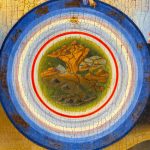
From antiquity, Galenic physicians extensively discussed the active powers of simple and compound drugs. In their views, simple drugs, that is, single ingredients, acted according to their material qualities and the properties of their substance. As for compound drugs, their efficacy resulted from the mutual interaction of their ingredients and…[Read more]
-
Elisabeth Moreau deposited Simple and Compound Drugs in Late Renaissance Medicine: The Pharmacology of Andrea Cesalpino (1593) in the group
Renaissance / Early Modern Studies on Humanities Commons 2 years, 4 months agoFrom antiquity, Galenic physicians extensively discussed the active powers of simple and compound drugs. In their views, simple drugs, that is, single ingredients, acted according to their material qualities and the properties of their substance. As for compound drugs, their efficacy resulted from the mutual interaction of their ingredients and…[Read more]
-
Elisabeth Moreau deposited Simple and Compound Drugs in Late Renaissance Medicine: The Pharmacology of Andrea Cesalpino (1593) in the group
 Medical Humanities on Humanities Commons 2 years, 4 months ago
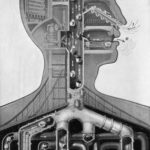
From antiquity, Galenic physicians extensively discussed the active powers of simple and compound drugs. In their views, simple drugs, that is, single ingredients, acted according to their material qualities and the properties of their substance. As for compound drugs, their efficacy resulted from the mutual interaction of their ingredients and…[Read more]
-
Francesco Luzzini deposited Harvesting Underground: (re)generative theories and vegetal analogies in the early modern debate on mineral ores (I) on Humanities Commons 2 years, 4 months ago
The early modern use of vegetal terms to explain the origin and growth of ores was widespread in mining industry, alchemy, and natural philosophy. In the writings of authors from many different backgrounds, mineral veins were often described as ‘trees’ which moved upwards, bore fruits, and underwent a life cycle. Accordingly, the existence in ore…[Read more]
-
Francesco Luzzini's profile was updated on Humanities Commons 2 years, 4 months ago
-
Elisabeth Moreau deposited Simple and Compound Drugs in Late Renaissance Medicine: The Pharmacology of Andrea Cesalpino (1593) on Humanities Commons 2 years, 4 months ago
From antiquity, Galenic physicians extensively discussed the active powers of simple and compound drugs. In their views, simple drugs, that is, single ingredients, acted according to their material qualities and the properties of their substance. As for compound drugs, their efficacy resulted from the mutual interaction of their ingredients and…[Read more]
-
Henry Colburn's profile was updated on Humanities Commons 2 years, 4 months ago
-
Brad Hostetler deposited Image, Epigram, and Nature in Middle Byzantine Personal Devotion on Humanities Commons 2 years, 4 months ago
In Nectar and Illusion, Henry Maguire examines Byzantium’s ambiguous relationship with nature in both art and literature. He demonstrates that after Iconoclasm, visual representations of the terrestrial world displayed in public settings were in “a constant tension between acceptance and denial,” but “tended to flourish most abundantly in…[Read more]
-
Brad Hostetler's profile was updated on Humanities Commons 2 years, 4 months ago
-
Christine Roughan's profile was updated on Humanities Commons 2 years, 5 months ago
-
- Load More

