


-

David A. Wacks deposited Francisco Núñez Muley, Petition (Granada, 1566) in the group
 CLCS Global Hispanophone on MLA Commons 2 years, 2 months ago
The Edict of 1567, or Anti-Morisco Edict, was promulgated by Spanish King Philip II on January 1, after being approved in Madrid on November 17, 1566. Its purpose was to eliminate specific Morisco customs, such as their language, dress, and dances. Núñez Muley’s Petition is an attempt to persuade Christian authorities to delay enforcing the 156…[Read more]
-
David A. Wacks deposited Francisco Núñez Muley, Memorial (Granada, 1566) in the group
 Public Humanities on Humanities Commons 2 years, 2 months ago
Núñez-Muley abstract
The Edict of 1567, or Anti-Morisco Edict, was promulgated by Spanish King Philip II on January 1, after being approved in Madrid on November 17, 1566. Its purpose was to eliminate specific Morisco customs, such as their language, dress, and dances. Núñez Muley’s Petition is an attempt to persuade Christian authorities to de…[Read more]
-
David A. Wacks deposited Francisco Núñez Muley, Memorial (Granada, 1566) in the group
 LLC Medieval Iberian on MLA Commons 2 years, 2 months ago
Núñez-Muley abstract
The Edict of 1567, or Anti-Morisco Edict, was promulgated by Spanish King Philip II on January 1, after being approved in Madrid on November 17, 1566. Its purpose was to eliminate specific Morisco customs, such as their language, dress, and dances. Núñez Muley’s Petition is an attempt to persuade Christian authorities to de…[Read more]
-
David A. Wacks deposited Francisco Núñez Muley, Memorial (Granada, 1566) in the group
 LLC 16th- and 17th-Century Spanish and Iberian Poetry and Prose on MLA Commons 2 years, 2 months ago
Núñez-Muley abstract
The Edict of 1567, or Anti-Morisco Edict, was promulgated by Spanish King Philip II on January 1, after being approved in Madrid on November 17, 1566. Its purpose was to eliminate specific Morisco customs, such as their language, dress, and dances. Núñez Muley’s Petition is an attempt to persuade Christian authorities to de…[Read more]
-
David A. Wacks deposited Francisco Núñez Muley, Memorial (Granada, 1566) in the group
 CLCS Mediterranean on MLA Commons 2 years, 2 months ago
Núñez-Muley abstract
The Edict of 1567, or Anti-Morisco Edict, was promulgated by Spanish King Philip II on January 1, after being approved in Madrid on November 17, 1566. Its purpose was to eliminate specific Morisco customs, such as their language, dress, and dances. Núñez Muley’s Petition is an attempt to persuade Christian authorities to de…[Read more]
-
David A. Wacks deposited Francisco Núñez Muley, Memorial (Granada, 1566) in the group
 CLCS Medieval on MLA Commons 2 years, 2 months ago
Núñez-Muley abstract
The Edict of 1567, or Anti-Morisco Edict, was promulgated by Spanish King Philip II on January 1, after being approved in Madrid on November 17, 1566. Its purpose was to eliminate specific Morisco customs, such as their language, dress, and dances. Núñez Muley’s Petition is an attempt to persuade Christian authorities to de…[Read more]
-
David A. Wacks started the topic Open access teaching unit: Alfonso X, Cantigas de Santa Maria (Cantiga 5) in the discussion
CLCS Medieval on MLA Commons 2 years, 2 months agoAlfonso X was king of “Castilla, León, Sevilla, Córdoba, Murcia, Jaén, and el Algarbe.” As evidenced by his title, he came to have possession of various kingdoms in Iberia. He was born in Toledo in 1221 and died in Seville in 1284, at 63 years of age. He is called the Learned King because he was an author, poet, musician, and historian, and becaus…[Read more]
-
David A. Wacks deposited Alfonso X, Cantigas de Santa Maria: “Como Santa Maria ajudou a Emperadriz de Roma”/ “Cómo Santa María ayudó a la emperatriz de Roma” on Humanities Commons 2 years, 2 months ago
Alfonso X was king of “Castilla, León, Sevilla, Córdoba, Murcia, Jaén, and el Algarbe.” As evidenced by his title, he came to have possession of various kingdoms in Iberia. He was born in Toledo in 1221 and died in Seville in 1284, at 63 years of age. He is called the Learned King because he was an author, poet, musician, and historian, and becaus…[Read more]
-
David A. Wacks deposited Cantigas de Santa Maria: “Como Santa Maria ajudou a Emperadriz de Roma”/ “How the Virgen Mary Helped the Empress of Rome” on Humanities Commons 2 years, 2 months ago
Alfonso X was king of “Castilla, León, Sevilla, Córdoba, Murcia, Jaén, and el Algarbe.” As evidenced by his title, he came to have possession of various kingdoms in Iberia. He was born in Toledo in 1221 and died in Seville in 1284, at 63 years of age. He is called the Learned King because he was an author, poet, musician, and historian, and becaus…[Read more]
-
David A. Wacks deposited Francisco Núñez Muley, Memorial (Granada, 1566) on Humanities Commons 2 years, 2 months ago
Núñez-Muley abstract
The Edict of 1567, or Anti-Morisco Edict, was promulgated by Spanish King Philip II on January 1, after being approved in Madrid on November 17, 1566. Its purpose was to eliminate specific Morisco customs, such as their language, dress, and dances. Núñez Muley’s Petition is an attempt to persuade Christian authorities to de…[Read more]
-
David A. Wacks deposited Francisco Núñez Muley, Petition (Granada, 1566) on Humanities Commons 2 years, 2 months ago
The Edict of 1567, or Anti-Morisco Edict, was promulgated by Spanish King Philip II on January 1, after being approved in Madrid on November 17, 1566. Its purpose was to eliminate specific Morisco customs, such as their language, dress, and dances. Núñez Muley’s Petition is an attempt to persuade Christian authorities to delay enforcing the 156…[Read more]
-
David A. Wacks posted an update on Humanities Commons 2 years, 6 months ago
[blog post] Moses Arragel’s vernacular rabbinics in the ‘Biblia de Alba’ (Castile, ca. 1420) https://blogs.uoregon.edu/davidwacks/2023/07/23/arragel/
-
David A. Wacks started the topic Deadline extended to Mar 15: CFPs MLA 2024 (Medieval Iberian Studies) in the discussion
CLCS Medieval on MLA Commons 2 years, 11 months agoThe Medieval Iberian Forum of the MLA announces the following calls for papers for the 2024 MLA Convention (Philadelphia, Jan 4-7). Please note that presenters must be members of the MLA before registering for the conference (but not in order to submit an abstract).
New Currents in Medieval Iberian Studies (in person) The LLC Medieval I…[Read more]
-
David A. Wacks started the topic Deadline extended to Mar 15: CFPs MLA 2024 (Medieval Iberian Studies) in the discussion
LLC Medieval Iberian on MLA Commons 2 years, 11 months agoThe Medieval Iberian Forum of the MLA announces the following calls for papers for the 2024 MLA Convention (Philadelphia, Jan 4-7). Please note that presenters must be members of the MLA before registering for the conference (but not in order to submit an abstract).
New Currents in Medieval Iberian Studies (in person) The LLC Medieval Iberian F…[Read more]
-

Carmela Mattza started the topic REMINDER MLA 2024 – PHILADELPHIA – CALL FOR PAPERS in the discussion
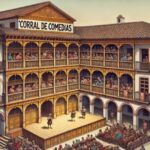 LLC 16th- and 17th-Century Spanish and Iberian Drama on MLA Commons 2 years, 11 months ago
MLA 2024 – Philadelphia
LLC 16th- and 17th-Century Spanish and Iberian Drama announces the following CALL FOR PAPERS:
Session 1: Translating and Staging Spanish Early Modern Plays Throughout Time
Submissions on staging early modern Spanish plays in languages other than Spanish exploring the interplay of language, translation, and emotions. 2…[Read more] -
Leah Wood Middlebrook started the topic “New Rules” as we consider the futures of Early Modern CLCS in the discussion
 CLCS Renaissance and Early Modern on MLA Commons 2 years, 11 months ago
At the most recent MLA Convention in 2023, the CLCS Renaissance and Early Modern Forum gathered a roundtable of scholars to discuss what “new rules”might help us think about how we do scholarship, teaching, and service in the field today. With the aim of inspiring the larger community to contemplate how we might reshape our thinking as we grow a…[Read more]
-
Leah Wood Middlebrook started the topic “New Rules” as we consider the futures of Early Modern CLCS in the discussion
CLCS Renaissance and Early Modern on MLA Commons 2 years, 11 months agoAt the most recent MLA Convention in 2023, the CLCS Renaissance and Early Modern Forum gathered a roundtable of scholars to discuss what “new rules”might help us think about how we do scholarship, teaching, and service in the field today. With the aim of inspiring the larger community to contemplate how we might reshape our thinking as we grow a…[Read more]
-
Leah Wood Middlebrook started the topic “New Rules” as we consider the futures of Early Modern CLCS in the discussion
CLCS Renaissance and Early Modern on MLA Commons 2 years, 11 months agoAt the most recent MLA Convention in 2023, the CLCS Renaissance and Early Modern Forum gathered a roundtable of scholars to discuss what “new rules”might help us think about how we do scholarship, teaching, and service in the field today. With the aim of inspiring the larger community to contemplate how we might reshape our thinking as we grow a…[Read more]
-
Leah Wood Middlebrook started the topic “New Rules” as we consider the futures of Early Modern CLCS in the discussion
CLCS Renaissance and Early Modern on MLA Commons 2 years, 11 months agoAt the most recent MLA Convention in 2023, the CLCS Renaissance and Early Modern Forum gathered a roundtable of scholars to discuss what “new rules”might help us think about how we do scholarship, teaching, and service in the field today. Below, we capture concisely each of the “rules” —guidelines, thinking points, and suggested practic…[Read more]
- Load More
Open access, open source, open to all
