


-

Elisabeth Moreau deposited Matter–Form (Hylomorphism) in Early Modern Alchemy in the group
 Renaissance Science and Medicine on Humanities Commons 5 years ago
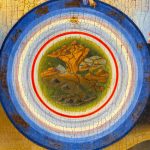
Hylomorphism is a recent term in the history of philosophy and the sciences. What was used from Antiquity to the early modern period was the terminological couple “matter” and “form.” According to the Aristotelian physics, matter and form are indissociable principles which constitute the elements and preside over the generation and destruc…[Read more]
-
Elisabeth Moreau deposited From Food to Elements and Humors: Digestion in Late Renaissance Galenism in the group
Renaissance Science and Medicine on Humanities Commons 5 years, 1 month agoIn late Renaissance medicine, the example of digestion was frequently invoked to prove the elemental composition of the human body. Food was considered as being decomposed in its first elements by the stomach, and digested into a thick juice which is assimilated by the liver and the body parts. Such a process points to the structure of the human…[Read more]
-

Evina Steinova deposited The Oldest Manuscript Tradition of the Etymologiae (eighty years after A. E. Anspach) in the group
 Science Studies and the History of Science on Humanities Commons 5 years, 1 month ago
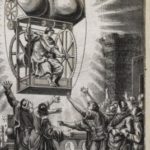
The Etymologiae of Isidore of Seville was one of the most widely read works of the early Middle Ages, as is evidenced by the number of surviving manuscripts. August Eduard Anspach’s handlist from the 1940s puts their number at almost 1,200, of which approximately 300 were estimated to have been copied before the year 1000. This article, based on a…[Read more]
-

Mateus Yuri Passos deposited The Chudnovsky Case: How Literary Journalism Can Open the “Black Box” of Science in the group
Science Studies and the History of Science on Humanities Commons 5 years, 2 months agoLiterary journalism offers an important way for explaining the complexity of the scientific world to a lay audience. An analysis of two of Richard Preston’s pieces published by The New Yorker, “The Mountains of Pi” and “Capturing the Unicorn” and how they give emphasize science-in-the-making.
-
David Amelang deposited David J. Amelang, “Gente de la Parroquia: identidad social del barrio teatral en el Madrid del Siglo de Oro” in Fernando Andrés, Mauro Hernández and Saúl Martínez (eds.), Mirando desde el puente. Estudios en homenaje al profesor James S. Amelang (UAM Ediciones, 2019), pp. 357-366 in the group
 Early Modern History on Humanities Commons 5 years, 2 months ago
“Hace ya veintiséis años se publicó una colección de ensayos en homenaje a la historiadora Natalie Zemon Davis que incluía un capítulo llamado “People of the Ribera: Popular Politics and Neighborhood Identity in Early Modern Barcelona”. En él, su autor, a quien ahora dedicamos esta obra, delinea brevemente una metodología para analizar el perfil s…[Read more]
-
David Amelang deposited David J. Amelang, “Comparing the Commercial Theaters of Early Modern London and Madrid” (Renaissance Quarterly 71.2, 2018), pp. 610-644 in the group
Early Modern History on Humanities Commons 5 years, 2 months agoComparative studies have revealed uncanny similarities between the theatrical cultures of Shakespearean England and Golden Age Spain, and in particular between the Elizabethan amphitheaters and the Spanish corrales de comedia (courtyard playhouses). Contrary to conventional wisdom, however, Spain’s (and, in particular, Madrid’s) courtyard the…[Read more]
- Load More
Open access, open source, open to all