

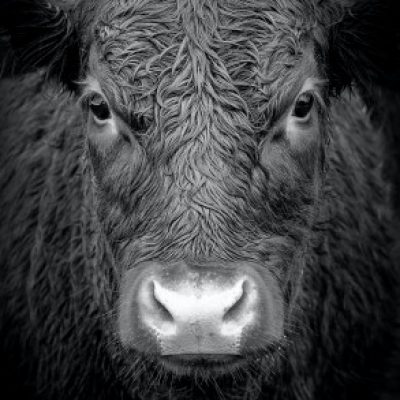


Domesticated over 10,500 years ago, cows are currently found in every country across the globe yet there is still much to learn about their varied histories, geographies, and lives. Part of the reason for this is a lack of soft infrastructure for scholars to connect with each other across institutional and disciplinary boundaries. This network aims to gather researchers who have an interest in broader ‘bovine scholarship’ and more specific ‘cow scholarship’ to share, learn, and engage in knowledge creation with one another.
Network Founders: Claudia Hirtenfelder (17ch38@queensu.ca) and Andrea Petitt (andrea.petitt@gender.uu.se).
Files List
-
 Veterinary Anthropology
We contribute to the growing field of veterinary humanities by promoting collaboration between veterinarians and anthropologists. Veterinary anthropology as we propose it analyzes the role of animal diseases in social life while questioning notions of animal health and human health. We distinguish three ways for veterinarians to collaborate with anthropologists, which more or less follow a chronological order. One form of collaboration requires anthropologists to bring risk perception or local knowledge on zoonoses identified by veterinarians. A more recent form of collaboration integrates veterinarians and anthropologists around the view of animals as actors in infrastructures of security. Finally, we suggest that, as veterinary expertise and its roles in contemporary societies is becoming an object of anthropological enquiry, a new space for collaboration is unfolding that enables veterinarians to see themselves through that reflexive lens of anthropological attention. Veterinary anthropology can therefore be defined as an anthropology of veterinarians and with veterinarians.
-
A New Pastoral Frontier: Colonial Development, Environmental Knowledge, and the Introduction of Trypanotolerant Cattle in French Equatorial Africa, 1945–1960
https://doi.org/10.1086/721179
After the Second World War, colonial veterinary services, entrepreneurs, and
African villagers in French Equatorial Africa (AEF) began to raise cattle in regions
where this had been deemed impossible because of the threat of African
animal trypanosomiasis. The opening of this new pastoral frontier in the
humid savannas of Central Africa was not only a challenging logistical operation,
involving the purchase, transport, and acclimatization of thousands of
trypanotolerant animals. It also hinged on the mobilization of various forms
of expertise, from veterinary medicine to soil science, important financial investments,
and the participation of rural Africans. The article argues that the
specific conditions in postwar AEF generated a frontier that was distinct from
many other global and African cattle frontiers, as it was driven more by latecolonial
development ideas and funds than capitalist expansion, even if these
were sometimes entangled. Shaped by the interplay between local, (trans)imperial,
and globally circulating knowledge, trypanotolerant cattle production
in the AEF took the complementary forms of extensive ranching and smallscale
peasant production. Although the introduction of trypanotolerant cattle
triggered new conflicts, it was further pursued by postcolonial states, transforming
rural economies and ecologies. -
Women and Cattle "Becoming-With" in Botswana
-
Milking economies: Multispecies entanglements in the infant formula industry
Abstract
In 2016 the Chinese infant formula company Feihe International signed a deal with the Canadian Dairy Commission (CDC) to process Canadian cows’ and goats’ milk for infant formula export to China. Our purpose in this paper is to understand how this deal – and the new Feihe formula factory located in Kingston, Canada – is underpinned by a series of multispecies entanglements across cow, human and goat mothers in China and Canada. To do so, we analyse official correspondence between the CDC, Feihe and City of Kingston; market reports for the dairy, goat and infant formula industries; and news articles about the Feihe infant formula plant. Conceptually, we develop an anti-colonial, multispecies entanglement framework to chart the violent inclusions, exclusions and typologizations that make milk and formula economies possible. We are specifically interested in how the Feihe–CDC deal (re)configures entanglements across species, nation, race, science and motherhood. To understand these relations, we heuristically imbricate two different sets of entanglements that underpin this deal: milk drinking, empire and genetic purity across race, breed and species; and motherhood, science and technology across humans, goats and cows. We use our threefold entanglement framework to better understand the violence of these imbrications and to work towards a multispecies feminist ethic in the infant formula industry.